Everest Khumbu Glacier Is Retreating by 30 Meters annually
Nepal is a tiny Himalayan nation with more than 1900 snow – capped mountains. The world’s environment is changing rapidly over the years. Climate change is the biggest debate happening across the globe. The mountains of Nepal are suffering due to activities of people from across the globe. This country is not responsible for global warming but suffering heavily. Alarming fact that the Everest Khumbu Glacier is retreating by 30 meters annually shows future disasters. Lots of environmentalists and activists are concerned about the rate of glacier melting.
Few years before, smaller mountains below 6000 m of Nepal used to be covered with heavy snow. Nowadays, these mountains have turned into black rocky hill. If it is not taken seriously, then the world may turn into chaos. Every year, frequent avalanches and glacial lake burst have caused lots of havoc. Nepalese glaciers are melting rapidly and it needs serious concern from global authorities. It is no longer the problem of Nepal but it has to be accounted by countries across the globe. Moreover, glacier melting must be the global concern to protect life in earth for future generations.
Today, the Everest Khumbu Glacier is retreating by 30 meters annually and it needs proper attention. Let’s delve deeper into finding out its cause and effects in the Everest region of Nepal.
Khumbu Glacier Introduction
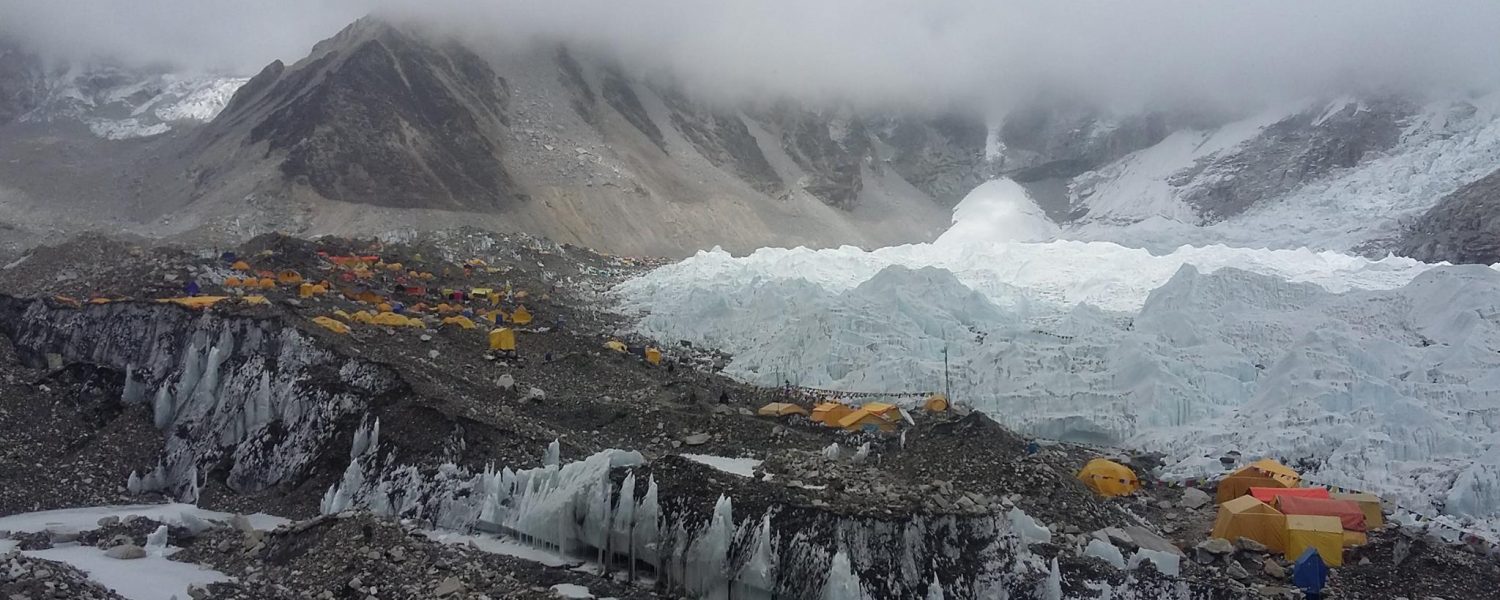
Nepal’s largest and the world’s highest glacier is the Khumbu Glacier. It is located between the Everest and Lhotse – Nuptse ridge. The distance of the glacier is about 17 kilometers to 22 kilometers. The starting point of the glacier is the top of the Khumbu Ice Fall and the final point is at around 4900 m above sea level near Gorakshep village. Similarly, the Everest Base Camp is located in the Khumbu glacier. Interestingly, it is also the final destination of the Everest Base Camp Trek in Nepal.
Major Features of Everest Khumbu Glacier Retreating
Before we talk more about the alarming fact “Everest Khumbu Glacier is retreating by 30 meters annually”, let’s talk about the features of the glacier. There are three sections of the Khumbu Glacier. They are the Khumbu Ice Fall section, Debris Section, and Everest Base Camp. Now, let’s know in brief about these features or sections of the Khumbu glacier.
Ice fall section of Khumbu Glacier
If you are interested in Everest expedition or climbing, then you may know about Khumbu Ice Fall. The biggest hurdle of Everest climbing is navigating through the Khumbu Ice Fall section. The route to Everest summit changes every year in the Ice fall section. Rapid melting of ice means the Khumbu Ice Fall doctors have to pave new route in every climbing season. In 2026 spring Everest climbing season, the climbing activities delayed due to massive ice fall blockage. The climbing resumed after week long efforts of Sherpa and Khumbu Ice fall doctors. Crevasses formed due to melting of ice are considered as deadly Everest climbing death traps.
Mount Everest Base Camp
The famous section of the Khumbu Glacier is the Mount Everest Base Camp. At an altitude of 5364 m above sea level, the base camp is the cornerstone of Everest Trekking and Everest Climbing. The face of the Khumbu region is the base camp. Unfortunately, the base camp is also changing every year. On fun fact, you can check our “Is Everest Base Camp Stone Changing Every year?“ blog in our website.
Debris Cover Section: Increasing size of Moraines affecting the Everest Base Camp Trek route
The lower section of the Khumbu glacier is full of rocky boulders and unconsolidated soil and rocks transported by glacier. Moraines formed due to glacier are affecting the face of the Everest Base Camp Trek route. Therefore, the route between Gorakshep and Everest Base Camp is continuously changing every year.
Calls for Relocation of Everest Base Camp due to glacier melting
Recently, the calls for relocation of Everest Base Camp is increasing rapidly. Trekking operators and climbing operators are asking the Nepal Government to relocate the base camp in safer area. Note down that the base camp hosts more than 1700 people in each climbing season. The threat of glacier melting is there but littering and over human encroachment of this sensitive region is also the major concern.
Everest Khumbu Glacier is Retreating by 30 Meters annually
Collapsing seracs are causing lots of incidents every year. According to various researches done by different organizations like ICIMOD and University of Maine, the lower section of the glacier is melting by 20 meters to 30 meters annually. The higher elevation section of the Khumbu glacier is retreating in unprecedented rate. Researchers claim, this is the major issue to the global environment. Besides the retreating of glacier, structural shift and destabilization caused due to high mountain Asia warming is major concern. It calls for global attention. It’s time for all of us to unite and raise voice against global warming.
Climate Change effects on Glacier Melting in Himalayas: Scientists warn rapid melting of glaciers
As mentioned above, Scientists are continuously warning the world about rapid melting of glaciers across Himalayas. What are the major causes of glacier melting? Climate change due to global warming is the major cause of glacier melting. The world is experiencing rise in temperature every year. Therefore, scientists are predicting shorter lifespan of Earth. Himalayas are the lifeline of earth’s eco-system. If mountains are drying in rapid pace, then disasters are bound to happen.
Over the years, the incidents of avalanche, flash floods, and glacial lake breakouts have increased significantly. Please understand that it is not only causing havoc to human settlements but also to an entire world. Therefore, the Everest Khumbu Glacier is retreating by 30 meters annually must be taken seriously by all. This blogger urges all readers to raise their voice to preserve glaciers and Himalayas for our future generations.






Best Everest Base Camp Trek Guide to Plan Your Trip
[…] to Gorakshep, leave your bags at the lodge, and continue to Everest Base Camp explore via the Khumbu Glacier. After celebrating at Base Camp stone, return to Gorakshep. Walking: 7–8 hours (12–14 […]