
Everest Base Camp Trek Route from Lukla
The Everest Base Camp Trek Route from Lukla is Nepal’s most popular trekking trail. Every year, thousands of trekkers follow this iconic route into the Khumbu region. Along the way, they enjoy spectacular Himalayan scenery, experience the rich Sherpa culture, and admire close-up views of some of the world’s highest mountains.
In this guide, you’ll find a simple overview of the route from Lukla to Everest Base Camp. Specifically, it covers the daily trekking schedule, major villages, altitude gains, and the trail conditions you can expect. As a result, you can better understand the journey before starting your adventure.
Starting Point: Lukla (2,860 m)
Most Everest Base Camp treks begin with a scenic mountain flight from Kathmandu or Manthali to Lukla. Upon arrival, you’ll land at the famous Tenzing–Hillary Airport, the main gateway to the Everest region.
From here, the trail descends gradually through pine forests and follows well-maintained stone paths. Along the route, you’ll cross suspension bridges, pass colorful prayer wheels, and walk through traditional Sherpa villages. Meanwhile, the surrounding mountain scenery becomes more impressive with every step.
Fortunately, the first trekking day is relatively short. Therefore, it gives your body time to adjust after the flight before you continue to higher elevations.
- Typical walking time: 3–4 hours
- Overnight stay: Phakding or a nearby village
The Route of Everest Base Camp Trek from Lukla to Phakding (2,610 m)
This section follows the Dudh Koshi River, crossing several suspension bridges decorated with colorful prayer flags. The trail is easy and scenic, with views of snow-capped peaks and waterfalls.
Phakding is a small village with comfortable teahouses, making it an ideal spot for the first night to ease acclimatization.
Phakding to Namche Bazaar (3,440 m)
This is one of the most exciting days on the Everest Base Camp route. The trail enters Sagarmatha National Park, crosses multiple high suspension bridges (including the famous Hillary Suspension Bridge), and climbs steeply to Namche Bazaar.
Namche Bazaar is the principal commercial and logistical center of the Khumbu region, distinguished by its natural amphitheater-like topography. On clear days, trekkers get their first glimpse of Mount Everest along this stretch.
Walking time: 6–7 hours
Overnight: Namche Bazaar
Acclimatization Day in Namche Bazaar
The Best EBC Trek Route From Lukla 2026!
Proper acclimatization is essential on the Everest Base Camp trek. A rest day in Namche allows your body to adjust to altitude while still staying active.
Popular acclimatization hikes include:
- Everest View Hotel (panoramic Himalayan views)
- Khumjung village
- Sherpa Culture Museum
Namche Bazaar to Tengboche (3,860 m)
The trail from Namche Bazaar to Tengboche is widely regarded as one of the most scenic segments of the Everest region trek. It follows a gradual contour along the mountainside, offering panoramic views of Mount Everest, Ama Dablam, and Lhotse, before descending to the river and climbing up to Tengboche.
Tengboche is famous for its monastery, the largest in the Khumbu region, set against a dramatic Himalayan backdrop.
Tengboche to Dingboche (4,410 m)
As the trail climbs higher, the landscape becomes more alpine and rugged. Trekkers pass through Pangboche, one of the oldest Sherpa settlements, before continuing toward Dingboche.
Dingboche sits in a wide valley with stone-walled fields and is another important acclimatization stop.
Acclimatization Day in Dingboche
A second acclimatization day is highly recommended. Short hikes to nearby ridges or Nangkartshang Peak provide excellent views and help prepare the body for higher altitudes ahead.
Dingboche to Lobuche (4,910 m)
This section of the Everest Base Camp trek route is more challenging. The trail passes the Thukla Pass, where memorials honor climbers who lost their lives on Everest.
The environment becomes stark and glacial, with towering peaks and moraine landscapes.
Lobuche to Gorak Shep (5,164 m) and Everest Base Camp (5,364 m)
From Lobuche, trekkers hike to Gorak Shep, the last settlement before Everest Base Camp. After a short rest, the trail continues across the Khumbu Glacier to reach Everest Base Camp.
Standing at the base of Mount Everest is a powerful and unforgettable moment, surrounded by ice pinnacles, prayer flags, and expedition tents (in the spring season).
Sunrise Viewpoint: Kala Patthar (5,545 m)
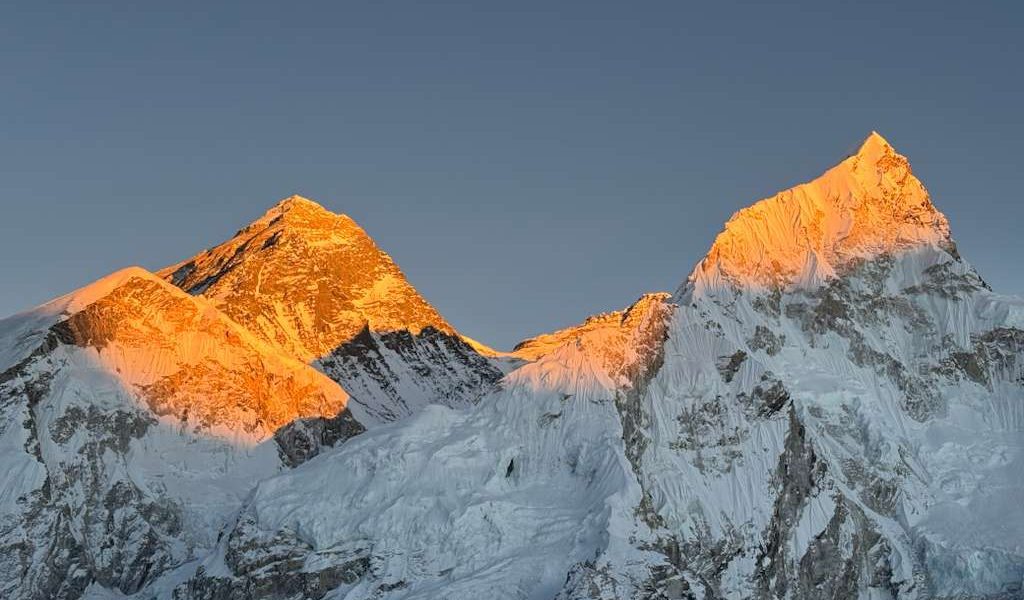
Kala Patthar is the highest point of the trek and offers one of the best close-up views of Mount Everest. Most trekkers ascend early in the morning to witness the sunrise before descending toward Pheriche or Namche on the return journey.
Return Route from Everest Base Camp
The return journey generally follows the same route back to Lukla, descending gradually through Gorak Shep, Dingboche, Namche Bazaar, and finally Lukla. Descending is physically easier, but care is still required.
Guide to Everest Base Camp Trek
Planning the Everest Base Camp Trek becomes much easier when you have the right information before setting out. First of all, understanding the route, trekking seasons, altitude, and daily hiking distances will help you prepare both physically and mentally. In addition, knowing what to expect along the trail allows you to enjoy the journey with greater confidence. From the thrilling flight to Lukla to the final steps at Everest Base Camp, each day offers breathtaking mountain views, welcoming Sherpa villages, ancient monasteries, and unforgettable Himalayan landscapes.
Moreover, a complete Everest Base Camp Trek guide covers every essential aspect of the adventure. It explains the required permits, the best time to trek, accommodation options, transportation, fitness preparation, and recommended packing lists. Furthermore, it provides valuable acclimatization tips, altitude information, and practical advice to help reduce the risk of altitude sickness. As a result, you can plan a safer, more comfortable, and more enjoyable trekking experience.
If you would like to learn more, be sure to read our Everest Base Camp Trek Guide for detailed planning advice. There, you’ll find expert recommendations on choosing the right itinerary, estimating your budget, selecting the necessary gear, and preparing for changing mountain weather. Ultimately, careful planning is the key to a successful Everest Base Camp adventure, allowing you to focus on the incredible scenery and unforgettable memories that await along the trail.
Conclusion of the Everest Base Camp Trek Route
The Everest Base Camp Trek Route from Lukla offers an unforgettable combination of adventure, culture, and spectacular mountain scenery. Throughout the journey, you’ll walk through traditional Sherpa villages, cross iconic suspension bridges, and enjoy breathtaking views of the Himalayas. At the same time, gradual altitude gain and well-planned acclimatization days help make the trek safer and more enjoyable.
Although the trail is physically demanding, it is achievable for most trekkers with good fitness, careful preparation, and a realistic pace. Furthermore, trekking with an experienced guide can enhance your experience by providing local knowledge, navigation, and added safety. From the lively streets of Namche Bazaar to the peaceful surroundings of Everest Base Camp, each stage of the trek offers something unique.
We hope this guide has given you a clear understanding of the Everest Base Camp trek route from Lukla, including the daily itinerary, major villages, altitude changes, and trail conditions. If you’re planning your adventure, use this route overview as a starting point, and explore our Everest Base Camp Trek Guide for detailed information on permits, packing, acclimatization, costs, and trekking preparation. With the right planning, you’ll be well prepared to enjoy one of Nepal’s most rewarding and iconic trekking experiences.