Trip overview
Manaslu Circuit Trek Overview
The Manaslu Circuit Trek is one of Nepal’s most remarkable trekking adventures. It circles the majestic Mount Manaslu (8,163 m), the world’s eighth-highest mountain. The trail lies in the remote Himalayas of north-central Nepal, near the Tibetan border. This unforgettable journey combines spectacular mountain scenery, authentic Himalayan culture, and peaceful trekking trails. It also includes the rewarding challenge of crossing Larkya La Pass (5,106 m). For trekkers seeking fewer crowds, it is an excellent alternative to the Everest Base Camp and Annapurna Circuit treks. The 12 Days Manaslu Circuit Private Trek offers the perfect balance of adventure, natural beauty, and cultural immersion.
Manaslu Circuit Trek Highlights
The Manaslu Circuit is one of Nepal’s finest restricted-area treks. It follows ancient salt-trading routes that once connected Nepal and Tibet. As you hike through the Budhi Gandaki Valley, the landscapes change dramatically. You’ll also notice changes in climate, culture, and local traditions. The trail begins in lush subtropical forests beside roaring rivers and waterfalls. It gradually climbs through traditional villages, alpine meadows, glacial valleys, and rugged mountain terrain. Snow-capped Himalayan peaks surround the trail throughout the journey.
Landscapes Along the Manaslu Circuit
One of the trek’s greatest highlights is its remarkable diversity. Every day reveals new scenery and fresh cultural experiences. The lower trail passes terraced fields, bamboo forests, and suspension bridges. You’ll also walk through traditional Gurung villages. As you gain altitude, pine and rhododendron forests replace the subtropical vegetation. Higher up, the landscape opens into wide Himalayan valleys where yaks graze freely. Villages like Namrung, Lho, Samagaun, and Samdo reflect strong Tibetan Buddhist traditions. You’ll discover ancient monasteries, mani walls, colorful prayer flags, and beautiful chortens along the way.
Culture and Villages Along the Route
Unlike Nepal’s busier trekking routes, the Manaslu Circuit remains peaceful and uncrowded. The region is protected as a restricted trekking area. As a result, visitor numbers remain relatively low. This creates quieter trails and more authentic cultural experiences. Local communities continue traditions that have existed for centuries. Walking through these villages offers a unique glimpse into Himalayan life and Tibetan-influenced culture.
Cross Larkya La Pass (5,106 m)
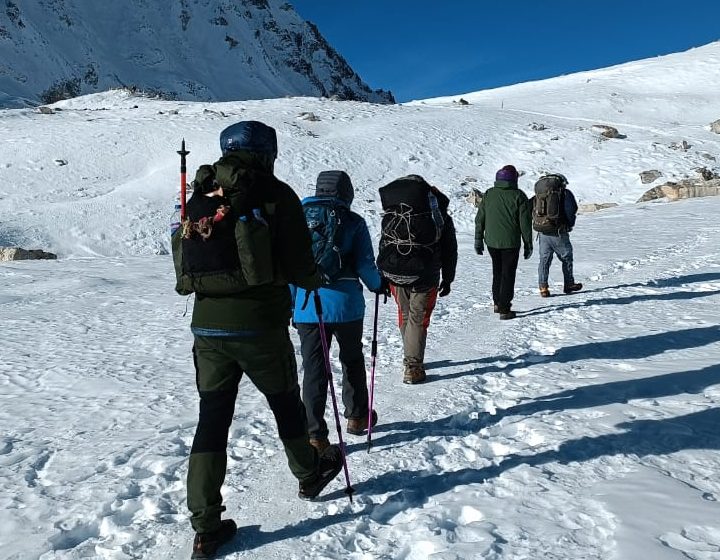
Crossing Larkya La Pass is the trek’s most memorable achievement. At 5,106 meters, it is one of Nepal’s longest and most spectacular mountain passes. The climb is challenging but highly rewarding. From the summit, you’ll enjoy panoramic views of Mount Manaslu, Himalchuli, Cheo Himal, Himlung Himal, Kang Guru, and Annapurna II. Countless snow-covered peaks stretch across the horizon. Watching the sunrise from the pass creates an unforgettable Himalayan experience.
Manaslu Conservation Area
The Manaslu region is home to the beautiful Manaslu Conservation Area. This protected landscape is famous for its rich biodiversity. Wildlife includes Himalayan tahr, blue sheep, musk deer, Himalayan monal, and Himalayan griffons. Lucky trekkers may even spot the elusive snow leopard. Spring brings colorful rhododendron forests into bloom. Autumn offers clear skies and outstanding mountain views. Every season reveals a different side of the Manaslu region. This makes the trek ideal for nature lovers, photographers, and adventure seekers alike.
A Well-Planned 12-Day Itinerary
Our 12-Day Manaslu Circuit Trek is carefully designed for adventure, safety, and comfort. The itinerary includes gradual altitude gain and proper acclimatization. This approach helps trekkers adjust safely before crossing Larkya La Pass. Experienced, government-licensed guides lead the journey with confidence. They also share insights into the region’s history, culture, and natural beauty. Whether you’re an experienced trekker or a first-time visitor, this trek offers an unforgettable Himalayan adventure. Expect breathtaking landscapes, warm local hospitality, and memories that last a lifetime.
Why Trek the Manaslu Circuit?
The Best Manaslu Trek is more than a trekking holiday. It is a journey through one of Nepal’s most remote and beautiful Himalayan regions. Unlike the busier Everest Base Camp and Annapurna Circuit trails, the Manaslu region remains peaceful and less crowded. Here, spectacular mountain scenery meets authentic Tibetan culture and untouched natural landscapes.
One of the trek’s greatest highlights is its remarkable diversity. The scenery changes dramatically as you gain elevation. The trail begins in warm river valleys with terraced fields and subtropical forests. It gradually climbs through pine and rhododendron forests. Along the way, you’ll pass traditional mountain villages and alpine meadows. Higher up, the trail reaches glacial valleys and the snow-covered landscapes surrounding Larkya La Pass.
The Manaslu region is a restricted trekking area. As a result, far fewer trekkers visit compared to other popular routes. This creates a quieter and more peaceful trekking experience. You’ll enjoy uncrowded trails and comfortable teahouses. It also provides more opportunities to connect with local communities. Instead of busy viewpoints, you’ll hear flowing rivers and fluttering prayer flags. The Himalayan scenery remains the true highlight throughout the journey.
The region is deeply influenced by Tibetan Buddhism. Villages like Namrung, Lho, Samagaun, and Samdo reflect this rich heritage. You’ll see ancient monasteries, mani walls, spinning prayer wheels, and colorful chortens. Traditional stone houses add to the region’s unique charm. Together, these cultural landmarks offer a glimpse into centuries-old Himalayan traditions.
Cross the Spectacular Larkya La Pass (5,106 m)
Crossing Larkya La Pass (5,106 m) is the main highlight of the Manaslu Circuit Trek. The gradual climb through alpine landscapes prepares you for this incredible mountain crossing.
You will start early in the morning and walk across rugged glacial terrain. After reaching the summit, you will enjoy breathtaking views of Mount Manaslu, Himlung Himal, Cheo Himal, Kang Guru, Annapurna II, and many surrounding peaks. For many trekkers, this moment becomes the most memorable part of their Himalayan adventure.
After crossing the pass, the trail descends toward the beautiful Bimthang Valley. Here, green meadows, glaciers, and towering mountains create a stunning contrast. The peaceful valley offers a perfect ending to the challenging high-altitude section.
Safety and Acclimatization
Our 12-Day Manaslu Private Trek is designed for adventure, comfort, and safety. The itinerary includes gradual altitude gain and proper acclimatization. This helps your body adjust before crossing Larkya La Pass.
Our experienced, government-licensed guides monitor your health throughout the trek. They provide support with altitude management and explain local cultures and traditions. Their knowledge helps you understand the landscapes, wildlife, and communities of the Manaslu region.
Why Book Your Manaslu Circuit Trek with HIMALAYA View Treks?
Choosing the right trekking company is essential for a successful Himalayan adventure. At HIMALAYA View Treks, we provide professional service, experienced guides, and carefully planned itineraries. Our priority is your safety, comfort, and authentic travel experience.
When You Book with Us, You’ll Enjoy:
- Experienced, government-licensed trekking guides.
- Well-planned itineraries with proper acclimatization.
- Friendly and reliable local porter support.
- Comfortable teahouse accommodation throughout the trek.
- Assistance with trekking permits and logistics.
- Transparent pricing with no hidden costs.
- Personalized service before, during, and after your trek.
- Responsible tourism that supports local communities.
Our team has years of experience organizing treks throughout Nepal. We create memorable Himalayan journeys with your safety and comfort in mind. Whether you travel solo, as a couple, with friends, or in a private group, we ensure a smooth trekking experience.
Looking for a Longer Trek?
If you have extra time and want a bigger challenge, consider our 19 Days Manaslu with Annapurna Circuit Trek. This extended adventure combines two of Nepal’s most famous trekking routes. You will cross both Larkya La Pass (5,106 m) and Thorong La Pass (5,416 m) in one incredible journey.
The trek takes you through remote Manaslu villages, Tibetan-influenced communities, and the diverse landscapes of the Annapurna region. It offers spectacular mountain views, cultural experiences, and an unforgettable high-altitude adventure.
If you are looking for breathtaking scenery, authentic culture, and fewer crowds, the Manaslu Circuit Trek is an excellent choice. This journey offers one of Nepal’s most rewarding trekking experiences. From traditional villages to dramatic mountain passes, every day brings new discoveries and lasting memories.
Join HIMALAYA View Treks and experience why the 12 Days Manaslu Circuit Trek is considered one of Nepal’s finest Himalayan adventures.
What Our Trekkers Say
Planning the Manaslu Circuit Trek? Read our TripAdvisor reviews to see what previous trekkers say about our guides, support, and trekking services in Nepal.
Short Itinerary
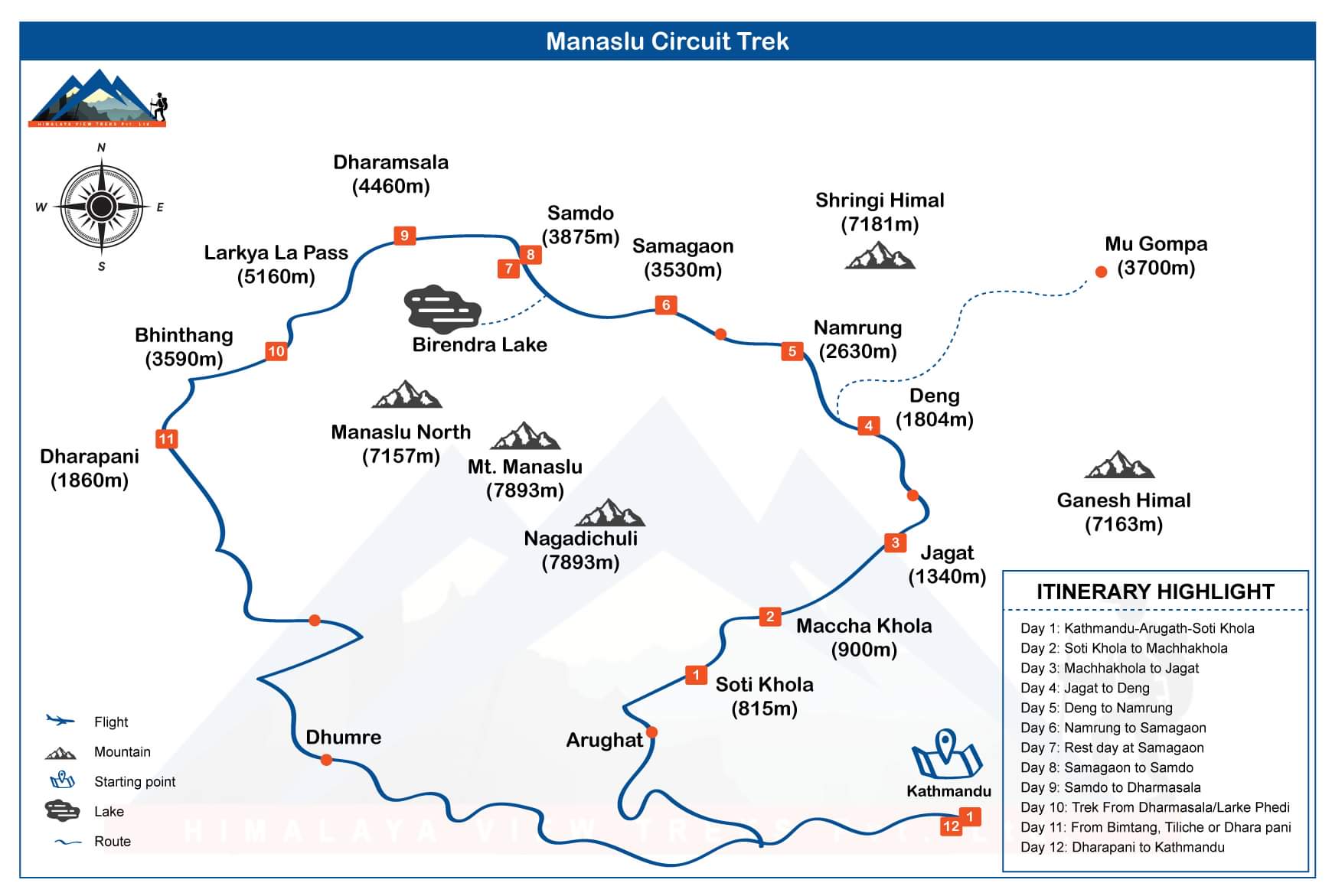
Manaslu Circuit Trek Itinerary - 12 Days
Day 01: Drive from Kathmandu to Machha Khola (825m/2328 ft) 149 Km, 8-9 hours
Day 02: Machha Khola to Jagat (1340m/4395ft) Walking Distance: 22.2 Km/ 6/7 Hours
Day 03: Jagat to Deng (2095m/6871ft) Walking Distance: 20 Km/7 Hours
Day 04: Deng to Namrung (2900m/9512ft) Walking Distance: 19.4 Km/ 6/7 Hours
Day 05: Namrung to Samagaun (3500m/11480ft) Walking Distance: 18Km/7-8 Hours
Day 06: Acclimatization Day at Samagaun, hike to Birendra Lake and Manaslu Base Camp.
Day 07: Samagaun to Samdo (3690m/12103ft) Walking Distance: 8.1Km/3-4 Hours
Day 08: Samdo to Dharamsala (4450m/14596ft) Walking Distance: 6.6 Km/4-5 Hours
Day 09: Dharamsala to Bhimtang (3590m/11775ft) Via Larkya La Pass (5106m/16812ft) 23Km/8-9 Hours
Day 10: Bhimtang to Tilje or Dharapani (2300m/7545ft) Walking Distance: 26 Km/8-9 Hours
Day 11; Drive from Dharapani to Besisahar by local sharing Jeep and then Kathmandu by Bus 8-9 Hours drive
Day 12: Reserve Day. This day is kept as a flexible reserve day and can be used anywhere during the trek if there are unexpected delays due to weather, trail conditions, transportation, or other unforeseen circumstances.
Included
- Kathmandu to Machha Khola via Soti KholaKhola by Bus and Dhara Pani to By sharing Jeep and then Besisahar to Kathmandu Bus
- All meals (Breakfast, lunch, and dinner) during your Manaslu Circuit Trek with 11 nights Hotel Accommodation
- Government licensed holder, fluent English Speaking, Manaslu Familiar Himalaya view Treks guide, 1 assistant guide if Group sizes is more than 10 trekkers) one guide lead up to 10 trekkers.
- Strong local porter service to carry trekkers’ luggage — one porter for every two trekkers. Porter service is not included for solo travellers and can be arranged at an additional cost upon request.
- Cost Includes Guides and porters meals, accommodation, Salary, insurance, transportation, Insurance and needed equipment for the Trekking
- MCAP and ACAP entrance permit, Tsumnurbi Municipality permit, Manaslu special trekking permit
- Seasonal fresh fruits every day during Manaslu Circuit trek
- Water purification drop or tablets for safe drinking water
- Oximeter to measure Pulse and oxygen level
- Company T-shirt as a Souvenirs, and duffle bag if needed
- Local government, taxes, including official Service Charge
- Trip completion Certificate
Not Included
- Hotel accommodation and meals In Kathmandu
- Personal expense (shopping, snacks, boil bottle water, hot (tea, coffee) and cold drinks, hot shower, alcohol, Wi-Fi, telephone call, battery charge fee during the Manaslu circuit Trek)
- Personal clothing and trekking gear
- Personal travel insurance including evacuation coverage (compulsory) up to 6000m)
- Additional costs if delays flights and outside the itinerary
- All the costs and expenses which are not mentioned in includes list.
- Tips for guide and porters in end of the treks
Useful Info
12 Days Manaslu Trek – Key Highlights
- Trek under the shadow of Manaslu (8,163 m), one of the highest mountains in the world.
- Explore a remote, off-the-beaten-path trail that is generally less crowded than the Everest Base Camp and Annapurna Circuit routes.
- Experience diverse landscapes and cultures during the Manaslu Circuit Trek, including traditional settlements and the unique lifestyle of communities in the high mountains.
- Walk through a historic region associated with the kingdoms of Gorkha and the Ghale Kings while following an ancient trade route along the Budhi Gandaki Valley.
- Cross Larkya La Pass at 5,106 m, one of the highest points of the trek, and experience the dramatic landscapes of the Himalayas.
Is the Manaslu Circuit Trek Right for You?
The Manaslu Circuit Trek is graded as moderate to challenging. If you have completed a Himalayan trek before and want to challenge yourself, this trek can be a great choice. The trek lasts 12 days, with daily walking times ranging from approximately 3 to 9 hours. On average, you will walk for around 5 to 6 hours per day.
The route passes through challenging terrain, including cliffside paths, gravel trails, stone staircases, and steep sections. You should have good fitness and previous hiking experience to enjoy the trek comfortably. The trail is less crowded and offers spectacular views of the Himalayan mountains.
The highest point of the trek is Larkya La Pass at 5,106 m, a high mountain pass connecting the Budhi Gandaki Valley with the Marsyangdi Valley. Accommodation is provided in local mountain lodges and teahouses, which offer basic rooms and meals.
Best Time for the Manaslu Circuit Trek
Spring (March to May) and autumn (mid-September to November) are generally considered the best seasons for the Manaslu Circuit Trek. The weather is usually dry and clear, providing good conditions for trekking and enjoying mountain views. The days are generally pleasant, while nights can be cold at higher elevations.
In spring, the forests along the Manaslu trail come alive with wildflowers and orchids. Autumn is another popular season because the monsoon has cleared much of the dust from the atmosphere, often providing clear mountain views.
Late September and October can also be a good time to experience major Nepalese festivals such as Dashain and Tihar, depending on the dates of the festivals.
Winter trekking is possible for experienced trekkers, but conditions can be very cold and the Larkya La Pass crossing can become difficult in heavy snow or bad weather. The monsoon season can also bring rain, slippery trails, and poor visibility. We recommend choosing the trekking season carefully and checking current trail conditions before departure.
Getting to the Manaslu Circuit
The current trailhead for the Manaslu Circuit Trek is Machha Khola. The road network in the region has developed significantly, and trekkers can travel from Kathmandu to Machha Khola by local bus, shared jeep, or private vehicle.
If you are traveling on a budget, you can choose a local bus or shared jeep. The journey generally takes around 7 to 8 hours, depending on road and traffic conditions. Private vehicles are also available for travelers who prefer greater comfort and flexibility.
As per our itinerary, you travel by private vehicle from Kathmandu to Machha Khola, where the trek begins. From Machha Khola, the trail follows the Budhi Gandaki Valley through several mountain villages before crossing Larkya La Pass and continuing toward Dharapani.
After completing the trek at Dharapani, our vehicle will pick you up and drive you to your hotel in Kathmandu, according to the itinerary.
Manaslu Trekking Permit Fees
To obtain the required trekking permits, you need to provide the following documents and information:
- Original passport and copies
- Nepal visa number
- Passport-sized photographs
- Trekking start and end dates
- Trekking itinerary/route
- Entry and exit points
- Emergency contact information in Nepal and your home country
- Travel insurance details
Altitude Sickness & Acclimatization
The Manaslu Circuit Trek takes you into the high Himalayas, with the highest point of the trek at Larkya La Pass (5,106 m). As altitude increases, the amount of oxygen available decreases, so proper acclimatization is important.
Walk at a steady pace, stay hydrated, and allow your body enough time to adjust to the increasing elevation. Avoid rushing to reach higher elevations too quickly.
Common symptoms of altitude sickness can include headache, dizziness, nausea, fatigue, and shortness of breath. If symptoms become worse, you should stop ascending and descend to a lower elevation while seeking medical assistance.
A rest day at Sama Gaon is included in the itinerary to give your body time to adapt to the higher altitude.
Drinking Water and Hydration
Staying hydrated is important throughout the trek. Carry a reusable water bottle and drink regularly during the day.
Bottled water is available at many teahouses, but using a reusable bottle and treating or filtering local water can help reduce plastic waste.
You can use a suitable water filtration system or purification tablets to treat drinking water. Teahouses may also provide boiled and filtered water for an additional charge.
Internet and Mobile Connectivity
Internet and mobile connectivity are available in parts of the Manaslu region, although the connection can be unreliable in remote areas. Some teahouses provide Wi-Fi for an additional charge.
You can also purchase a local SIM card in Kathmandu. However, mobile coverage varies along the trekking route, so you should not rely on continuous connectivity.
Manaslu Circuit Trek Packing List
You do not need complicated equipment for the trek, but you should prepare properly for changing weather and high-altitude conditions. Essential items include:
- Sturdy trekking boots with good ankle support
- Rucksack or daypack with a waterproof cover
- Trekking pants and waterproof trousers
- T-shirts or trekking shirts
- Down jacket
- Windproof/waterproof jacket
- Fleece jacket or jumper
- Thermal inner layers
- Socks and underwear
- Sunglasses
- Sun hat and warm woolen cap
- Inner and outer gloves
- Headlamp, power bank, and extra batteries
- Sunscreen, wet wipes, and hand sanitizer
- Towel, flip-flops or sandals, and toiletries
- Water bottles and water purification tablets
- Crampons and gaiters, if required by trail conditions
- Four-season sleeping bag
- Sleeping bag liner
These are some of the essential items for the trek. You can also check our detailed Packing List for Trekking in Nepal for additional recommendations.
Most trekking equipment is available for hire or purchase in Kathmandu. You can leave unnecessary luggage at your hotel while trekking.
Guides, Porters and Staff
The Manaslu Circuit Trek crosses challenging mountain terrain, including high passes, glaciers, suspension bridges, and remote sections of the Himalayas. An experienced local guide can provide valuable knowledge of the route, local culture, and mountain conditions.
When you book a trek with us, we arrange an experienced local guide. Our guides have extensive experience in the region, hold the required government licenses, communicate in English, and receive training in wilderness first aid and emergency management.
A chief guide or trek leader leads the group. For every four trekkers, an assistant guide is provided. One porter carries the luggage of two clients, with a maximum porter load of 30 kg.
We believe in the ethical treatment of our staff. Our guides and porters receive appropriate clothing and equipment for mountain conditions, insurance, fair wages, and respectful working conditions.
Travel Insurance and Emergency Evacuation
For the Manaslu Circuit Trek, you should have comprehensive travel insurance that covers trekking at the maximum altitude included in your itinerary, which is 5,106 m at Larkya La Pass.
Your policy should also cover emergency medical treatment, hospitalization, and helicopter evacuation when required. Check the terms and conditions carefully before purchasing your insurance.
Trip Safety
We prioritize the safety of our clients throughout the trek. Our guides carry first-aid equipment and a pulse oximeter and have experience dealing with high-altitude conditions and emergencies.
The itinerary includes a rest day at Sama Gaon to support acclimatization. If a trekker develops symptoms of altitude sickness, the guide will assess the situation and follow the appropriate safety procedures. If necessary, the trekker will descend to a lower elevation and receive medical assistance.
A Typical Day on the Manaslu Trek
A typical trekking day begins with a wake-up call around 6 AM. After getting ready and having breakfast, you prepare your daypack and begin walking with your guide.
The day's walk usually starts around 8 AM. Along the trail, you will have short breaks to rest, enjoy the mountain scenery, and take photographs. Lunch is usually served at a local teahouse along the route.
After lunch and a short rest, you continue walking toward your overnight destination. Once you arrive at the teahouse, you can check in, rest, and enjoy refreshments before dinner.
After dinner, your guide will brief you about the following day's route, walking time, trail conditions, and other important information.
On average, you will walk for around 5 to 6 hours each day. The most demanding day is the crossing of Larkya La Pass on Day 9.
Responsible Travel
We encourage our guests to travel responsibly and help protect the natural environment of the Himalayas. Limit single-use plastic, avoid littering, and respect local communities and their traditions.
When you trek with us, you also support local communities, including guides, porters, teahouse owners, and other local service providers. We promote responsible and sustainable tourism throughout the Manaslu region.
Book your Manaslu Circuit Trek today and discover the spectacular landscapes, rich mountain culture, and remote trails of the Manaslu region with experienced local guides from HIMALAYA View Treks.
Trip Map