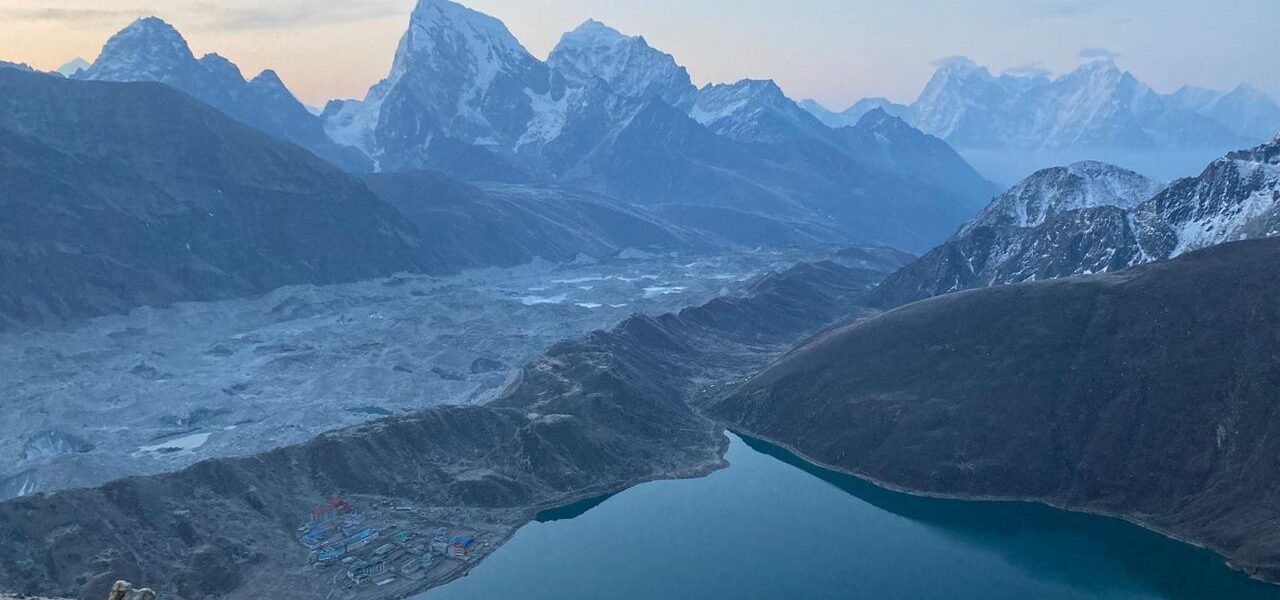
Ngozumpa Glacier: Nepal’s Largest and Longest Glacier in the Gokyo Valley
The Ngozumpa Glacier is one of the most spectacular natural features of Nepal’s Everest region. It is located in the beautiful Gokyo Valley. This massive glacier flows from the slopes of Cho Oyu (8,188 m), the world’s sixth-highest mountain. It is widely recognized as the longest glacier in Nepal. Moreover, it is one of the largest glaciers in the Himalaya.
Stretching through a remote alpine landscape, the glacier creates a remarkable setting for trekkers visiting Gokyo Lakes, Gokyo Ri and the surrounding Himalayan peaks. Its vast rocky surface, surrounding mountains, turquoise lakes and dramatic scenery make the Gokyo Valley a memorable destination for mountain adventures.
The Ngozumpa Glacier is also an important geographical feature of the Everest region. In fact, it feeds the Dudh Koshi river system and forms a major part of the landscape surrounding the Gokyo Lakes. Trekkers can explore this extraordinary glacial environment through several popular trekking routes. These include the Gokyo Ri Trek, Everest Three Passes Trek and Everest Base Camp with Cho La Pass Trek.
How Long and How Big Is the Ngozumpa Glacier?
The Ngozumpa Glacier is commonly described as approximately 36 kilometres (22 miles) long. This makes it the longest glacier in Nepal according to many tourism and geographical references. It flows southward from the Cho Oyu massif through the Gokyo Valley in the Solukhumbu district.
However, glacier measurements vary between scientific studies and geographical inventories. Some scientific studies measure the main active glacier trunk at approximately 18–20 kilometres. In contrast, broader geographical descriptions report around 36 kilometres when different sections or glacier branches are included. Therefore, the 36-kilometre figure is widely used in tourism information, although scientific measurements may differ.
The glacier covers a large area of the upper Dudh Koshi basin. Scientific inventories have estimated its area at roughly 61–79 square kilometres, depending on the inventory, mapping year and boundaries used. Its extensive debris-covered lower section contains rocky terrain, meltwater ponds, ice cliffs and uneven surfaces.
The lower portion of the glacier is covered by layers of rock, sand and gravel. This debris cover gives the glacier a different appearance from the clean, white glaciers seen higher in the mountains. In many places, the ice is hidden beneath thick layers of debris. As a result, the glacier looks more like a rocky valley than a frozen river.
Is Ngozumpa Glacier Bigger Than Khumbu Glacier?
Yes, the Ngozumpa Glacier is considerably larger than the Khumbu Glacier in terms of overall length and area in commonly used geographical comparisons. Both glaciers are located in the Everest region of Nepal. However, they occupy different valleys and have different geographical characteristics.
The Ngozumpa Glacier flows from the slopes of Cho Oyu and Gyachung Kang towards the Gokyo Valley. Meanwhile, the Khumbu Glacier originates in the high mountain region below Everest and flows towards Lobuche and the Everest Base Camp area.
Ngozumpa Glacier vs. Khumbu Glacier
The Ngozumpa Glacier is located in the Gokyo Valley and flows from the Cho Oyu and surrounding Himalayan mountains. It is commonly cited as approximately 36 km long. Nonetheless, scientific measurements of its main mapped glacier section often report shorter lengths of around 18–20 km, depending on the inventory and boundaries used.
The Khumbu Glacier, located in the Everest and Lobuche Valley, originates in the Everest region near the Western Cwm. It is commonly described as approximately 17 km long.
In commonly cited geographical inventories, the Ngozumpa Glacier is larger in area than the Khumbu Glacier. The Ngozumpa Glacier is mainly explored during treks to Gokyo Lakes, Gokyo Ri and Renjo La. Meanwhile, the Khumbu Glacier is associated with the Everest Base Camp and Lobuche trekking routes.
The Ngozumpa Glacier is the largest glacier in Nepal in terms of commonly cited glacier-area measurements. The Khumbu Glacier, however, is internationally famous. This is because it lies on the standard climbing route to Mount Everest and is associated with the Khumbu Icefall and Everest Base Camp.
Both glaciers are important parts of the Himalayan landscape, and each offers a different experience for trekkers exploring the Everest region.
Can You See Ngozumpa Glacier During the Gokyo Ri Trek?
Yes, you can see the Ngozumpa Glacier during the Gokyo Ri Trek. The Gokyo Ri Trek is one of the best ways to enjoy panoramic views of the Ngozumpa Glacier and the surrounding Himalayan mountains.
The trail leads through the beautiful Gokyo Valley, passing several turquoise glacial lakes, mountain villages and rocky landscapes before reaching Gokyo village.
From Gokyo village, trekkers can climb Gokyo Ri, a popular viewpoint at approximately 5,357 metres. The summit offers spectacular views of Mount Everest, Cho Oyu, Lhotse, Makalu and the surrounding Himalayan ranges. From the viewpoint, you can also see the vast Ngozumpa Glacier stretching across the valley below.
The glacier’s enormous rocky surface, meltwater ponds and surrounding mountain scenery make the Gokyo Ri viewpoint one of the most rewarding places in the Everest region for photography and mountain views.
The Gokyo Ri Trek is a popular choice for trekkers who want to explore the Gokyo Lakes and enjoy spectacular Himalayan scenery. For those who do not want to follow the standard Everest Base Camp route all the way to Base Camp, it is an excellent option.
Can You Visit the Ngozumpa Glacier During the Fifth Lake Trek?
Yes. The Fifth Lake Trek is another excellent opportunity to explore the landscape surrounding the Ngozumpa Glacier.
The trail from Gokyo village continues towards the fourth and fifth Gokyo Lakes. It passes through a quiet alpine landscape with impressive mountain views. The fifth lake, also known as Ngozumpa Tsho, lies in the upper Gokyo Valley, near the glacier’s surrounding landscape.
From the viewpoints near the fifth lake, trekkers can enjoy magnificent views of Mount Everest, Cho Oyu, and surrounding peaks. In addition, they can see parts of the Ngozumpa Glacier. This side trip offers a quieter experience than the main Gokyo village area. It also provides an excellent opportunity to explore more of the valley.
The Fifth Lake Trek can be added to a standard Gokyo Lakes itinerary. This allows trekkers to spend an additional day exploring the upper valley and its natural scenery.
Trekking Routes That Explore the Ngozumpa Glacier
Several trekking routes in the Everest region pass through Gokyo Valley or provide opportunities to explore the surroundings of the Ngozumpa Glacier. Depending on your itinerary, you can visit Gokyo Lakes or climb Gokyo Ri. Alternatively, you can cross high mountain passes connecting different parts of the Everest region.
– Gokyo Ri Trek: Explore the Gokyo Lakes and climb Gokyo Ri. Also, enjoy panoramic views of the Ngozumpa Glacier and surrounding Himalayan peaks.
– Renjo La to Gokyo Lake Trek: Cross Renjo La pass and descend into the Gokyo Valley. Here, the beautiful lakes and glacier scenery create an unforgettable Himalayan experience.
– Everest Three Passes Trek: Explore the Everest region while crossing Kongma La, Cho La and Renjo La. This adventurous route includes Gokyo Valley, Ngozumpa Glacier surroundings and several spectacular mountain viewpoints.
– Everest Base Camp with Cho La Pass Trek: Combine Everest Base Camp with the Gokyo Lakes by crossing Cho La Pass. This route connects the Everest Base Camp trail with Gokyo Valley.
– Fifth Lake Trek: Extend your stay in Gokyo Valley and explore the upper lakes, mountain viewpoints and glacier surroundings.
These trekking routes offer different ways to explore the Everest region. Whether you choose a shorter Gokyo Lakes adventure or a longer circuit through the high mountain passes, the Ngozumpa Glacier remains one of the most remarkable geographical features of the journey.
Glacier Retreat and Environmental Changes
Like many glaciers across the Himalaya, the Ngozumpa Glacier has experienced changes in its ice, surface and surrounding landscape. Rising temperatures, changes in snowfall and other climatic conditions affect the glacier’s mass balance and movement.
Its debris-covered lower section contains numerous meltwater ponds, exposed ice cliffs and uneven terrain. These features are part of the natural processes occurring as glaciers lose ice and their surfaces change.
Scientists continue to study the Ngozumpa Glacier to understand glacier retreat and meltwater development. In addition, they investigate the wider impacts of climate change in the Himalayan region. The glacier is an important source of water for downstream river systems and a valuable natural feature of Sagarmatha National Park.
Protecting the Himalayan environment is important for local communities, wildlife, and tourism and future generations. Trekkers visiting Gokyo Valley should respect the natural surroundings, avoid littering and follow local guidance while exploring the glacier landscape.
Conclusion
The Ngozumpa Glacier is one of the most impressive natural attractions in Nepal’s Everest region. Flowing from the slopes of Cho Oyu, it creates a dramatic landscape of rocky glacier surfaces, glacial lakes and high Himalayan Mountains.
As Nepal’s largest glacier in commonly cited geographical inventories and its longest glacier in many tourism references, Ngozumpa is an important geographical landmark of the Gokyo Valley. Its spectacular scenery can be enjoyed during the Gokyo Ri Trek, Fifth Lake Trek, Renjo La to Gokyo Lake Trek, Everest Three Passes Trek and Everest Base Camp with Cho La Pass Trek.
Visiting Gokyo Valley provides an opportunity to experience the beauty of the Himalayan glaciers and turquoise lakes. In addition, you can view the surrounding mountain peaks while exploring one of the most scenic trekking destinations in Nepal.