Best Manaslu Circuit Trek Guide
The Best Manaslu Circuit Trek Guide 2026/2027: Itinerary, Cost, Permits, Difficulty & Expert Tips: If you’re searching for a Himalayan trekking adventure that combines breathtaking mountain scenery, authentic Tibetan culture, peaceful trails, and a rewarding high-altitude challenge, the Manaslu Circuit Trek deserves a place at the top of your list. Often described as one of Nepal’s best-kept trekking secrets, this remarkable journey circles Mount Manaslu (8,163 m)—the world’s eighth-highest mountain. It also offers an unforgettable experience through one of the country’s most remote and culturally rich regions.
Unlike the busier Everest Base Camp and Annapurna Circuit routes, the Manaslu Circuit remains less crowded. It allows trekkers to enjoy a quieter and more authentic Himalayan experience. Every day brings dramatic changes in scenery, from lush subtropical forests and roaring rivers to alpine meadows, ancient monasteries, glacier valleys, and snow-covered mountain passes. Along the way, you’ll pass through traditional villages. Local communities continue to preserve centuries-old customs, Buddhist traditions, and a way of life deeply influenced by neighboring Tibet.
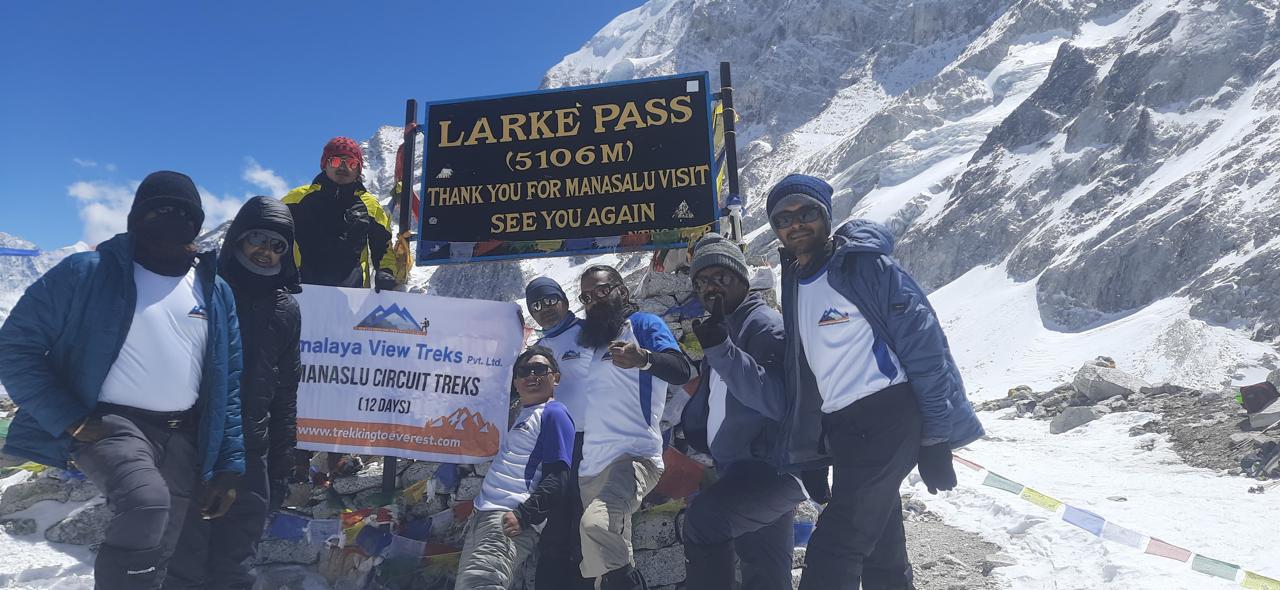
Larke La Pass 5106M.
The highlight of the trek is crossing Larkya La Pass (5,106 m), one of Nepal’s most spectacular high mountain passes. Standing on the pass after days of steady climbing is an unforgettable achievement. In addition, you are rewarded with panoramic views of towering Himalayan peaks, glaciers, and rugged alpine landscapes.
Whether you’re an experienced trekker looking for a new challenge or an adventurous traveler eager to discover Nepal beyond the popular trekking routes, the Manaslu Circuit Trek guide offers an ideal combination of adventure, culture, and natural beauty.
This comprehensive guide explains everything you need to know before planning your journey, including the best itinerary, permits, costs, accommodation, transportation, trekking difficulty, altitude, weather, packing list, and practical travel tips.
Why Choose the Manaslu Circuit Trek Guide?
Nepal is home to many world-famous trekking destinations, yet the Manaslu Circuit stands apart for its untouched beauty and authentic mountain culture. While Everest Base Camp attracts thousands of trekkers every season and the Annapurna region has become increasingly accessible, the Manaslu region continues to offer a peaceful trekking experience. You’ll find fewer crowds along the trail.
Here are some of the reasons why many experienced trekkers now consider the Manaslu Circuit one of Nepal’s finest trekking routes.
A Less Crowded Himalayan Adventure
One of the greatest advantages of trekking around Manaslu is the peaceful atmosphere. Because the region is designated as a restricted area requiring special permits and a licensed guide, visitor numbers remain significantly lower. This is compared with many other popular trekking routes.
This means quieter trails, more personal interactions with local communities, and uninterrupted views of Nepal’s spectacular mountain scenery.
Incredible Mountain Views
Throughout the trek you’ll enjoy magnificent views of numerous Himalayan peaks, including:
* Mount Manaslu (8,163 m)
* Himalchuli (7,893 m)
* Ngadi Chuli (7,871 m)
* Ganesh Himal
* Shringi Himal
* Himlung Himal
* Cheo Himal
* Kang Guru
* Annapurna II
Each day reveals new perspectives as the landscape changes dramatically with altitude.
Rich Tibetan Buddhist Culture
The upper Manaslu region shares strong cultural and historical ties with Tibet. Villages such as Lho, Samagaun, and Samdo are home to ancient monasteries, colorful prayer flags, chortens, mani walls, and traditional stone houses.
Visitors have the opportunity to witness daily life that has remained largely unchanged for generations. Friendly locals, yak caravans, spinning prayer wheels, and centuries-old Buddhist traditions create a truly unforgettable cultural experience. If your timeframe covers Manaslu Tsum Valley Trek then you can do it. In addition, you will experience untouched beauty of Nepal.
Diverse Landscapes
Few trekking routes in Nepal offer such remarkable diversity within a single journey.
You’ll walk through:
* Terraced rice fields
* Dense subtropical forests
* Pine and rhododendron woodlands
* Narrow river gorges
* Suspension bridges
* Waterfalls
* Alpine meadows
* Glacial valleys
* High mountain passes
* Snow-covered landscapes
Every day feels like entering a completely different world.
Crossing Larkya La Pass
At 5,106 meters, Larkya La Pass is one of Nepal’s most beautiful and rewarding mountain passes.
Although physically demanding, reaching the summit provides breathtaking panoramic views across the Himalayas. The descent toward Bimthang reveals glaciers, towering cliffs, and spectacular alpine scenery that many trekkers describe as the highlight of the entire adventure.
Excellent Wildlife
The Manaslu Conservation Area protects an impressive variety of wildlife and plants.
Depending on the season and a bit of luck, trekkers may spot:
* Himalayan Tahr
* Blue Sheep
* Musk Deer
* Himalayan Monal (Nepal’s national bird)
* Himalayan Griffon
* Snow Leopard (rarely seen)
* Red Fox
* Langur Monkeys
The region is also famous for its spring rhododendron blooms and pristine alpine vegetation.
Manaslu Circuit Trek Overview
Trek Duration: 12–16 Days
Maximum Elevation: Larkya La Pass (5,106 m)
Trek Difficulty: Moderate to Challenging
Accommodation: Local Teahouses
Best Seasons: Spring and Autumn
Starting Point: Machha Khola
Ending Point: Dharapani
Highest Mountain: Mount Manaslu (8,163 m)
Required Guide: Yes
Restricted Area: Yes
Where Is the Manaslu Circuit Trek?
The Manaslu region lies in the Gorkha District of north-central Nepal, close to the Tibetan border. The trek follows the Budhi Gandaki River before climbing into the high Himalayas and eventually crossing Larkya La Pass into the Annapurna region.
The journey begins with a scenic drive from Kathmandu to Machha Khola. From there, the trail gradually climbs through forests, villages, and alpine terrain. Toward the end, it descends to Dharapani, where road access connects trekkers to Besisahar and Kathmandu.
Because the Manaslu region remains relatively isolated, it has preserved its natural beauty and cultural heritage remarkably well. Modern development is limited. Therefore, the trek feels remote and adventurous while still offering comfortable teahouse accommodation.
Is the Manaslu Circuit Trek Right for You?
The Best Manaslu Circuit Trek is ideal for travelers who enjoy adventure, cultural exploration, and challenging mountain hiking with personal guide.
This trek is especially suitable if you:
* Want to avoid crowded trekking routes.
* Enjoy authentic local culture.
* Have previous hiking experience or maintain a good fitness level.
* Prefer remote mountain landscapes over commercial trekking destinations.
* Want to experience one of Nepal’s most scenic high mountain passes.
* Are looking for a rewarding Himalayan trek without technical climbing.
Although the trek reaches over 5,000 meters, no mountaineering skills are required. With proper acclimatization, a sensible pace, and guidance from an experienced trekking guide, many first-time Himalayan trekkers successfully complete the Manaslu Circuit.
In the next section of this guide, we’ll explore the detailed highlights of the trek, the best 12-day itinerary, daily walking distances, altitude gain, and what you can expect on each day of the journey.
Best Manaslu Circuit Trek Itinerary Complete Guide
Day 1: Drive from Kathmandu (1,400 m) to Machha Khola (930 m)
Driving Distance: Approximately 160 km. Driving Time: 8–10 hours. Your adventure begins with an early morning drive from Kathmandu. Leaving the bustling capital behind, the road follows the Trishuli River before gradually entering the hills of Gorkha District. Along the way, you’ll pass terraced farms, small villages, waterfalls, and beautiful river valleys.
The road becomes rougher as you approach the Budhi Gandaki Valley, adding a sense of adventure to the journey. After several hours, you arrive at the riverside village of Machha Khola, where you’ll spend your first night in a comfortable teahouse.
Highlights
* Scenic countryside drive
* Trishuli and Budhi Gandaki Rivers
* Traditional villages
* First overnight in the Manaslu region
Day 2: Trek from Machha Khola (930 m) to Jagat (1,340 m)
Walking Distance: 22 km. Walking Time: 6–7 hours. The trail follows the Budhi Gandaki River through forests, small settlements, and several suspension bridges. You’ll pass Khorlabesi and the natural hot springs at Tatopani. Later, you continue through narrow river gorges.
The gradual ascent makes this an excellent introduction to the trek. Jagat is a charming stone-paved village and serves as the official entry point into the restricted Manaslu region.
Highlights
* Natural hot springs
* Suspension bridges
* Beautiful waterfalls
* Traditional Gurung villages
Day 3: Trek from Jagat (1,340 m) to Deng (1,860 m)
Walking Distance: 20 km. Walking Time: 6–7 hours. Today’s trail climbs steadily through forests and picturesque villages including Salleri, Philim, and Ekle Bhatti. The route offers magnificent views of steep cliffs and cascading waterfalls. Meanwhile, the Budhi Gandaki River continues to accompany you.
As you gain elevation, you’ll begin noticing stronger Tibetan cultural influences in architecture and local traditions.
Highlights
* Philim Village
* Forest trails
* Scenic river crossings
* First Tibetan-influenced villages
Day 4: Trek from Deng (1,860 m) to Namrung (2,630 m)
Walking Distance: 19 km. Walking Time: 6–7 hours. The trail enters dense pine and rhododendron forests while gradually climbing through Bihi Phedi, Ghap, and Prok villages. Mani walls, prayer flags, and Buddhist chortens become increasingly common.
Upon reaching Namrung, you’ll be rewarded with your first spectacular views of Himalayan peaks, marking the transition into the higher mountain environment.
Highlights
* Forest trails
* Mani walls
* Buddhist culture
* First mountain panoramas
Day 5: Trek from Namrung (2,630 m) to Samagaun (3,530 m)
Walking Distance: 18 km. Walking Time: 6–7 hours. This is one of the most scenic days of the trek. You’ll pass the beautiful villages of Lho and Shyala while enjoying magnificent views of Mount Manaslu, Himalchuli, and Ngadi Chuli.
Lho Monastery is a wonderful place to stop and admire the surrounding mountains before continuing to Samagaun, the largest settlement in the upper Manaslu region.
Samagaun is surrounded by glaciers and towering peaks, making it one of the trek’s most memorable villages.
Highlights
* Lho Monastery
* Shyala Village
* Mount Manaslu viewpoints
* Traditional Tibetan culture
Day 6: Acclimatization Day at Samagaun (3,530 m)
Proper acclimatization is essential before ascending to higher elevations.
Rather than resting all day, it’s recommended to take a short hike to improve your body’s adaptation to altitude.
Popular options include:
* Pungyen Gompa
* Manaslu Base Camp
* Birendra Lake
These side trips provide incredible mountain views while helping reduce the risk of altitude sickness.
Highlights
* Acclimatization hike
* Birendra Lake
* Manaslu Glacier views
* Local monasteries
Day 7: Trek from Samagaun (3,530 m) to Samdo (3,875 m)
Walking Distance: 8 km. Walking Time: 4–5 hours. Today’s trek is shorter but continues gaining elevation. The trail crosses open yak pastures with spectacular views of glaciers and snow-covered peaks.
Samdo is one of the highest permanent settlements in Nepal and lies close to the Tibetan border. The village provides fascinating insight into traditional Himalayan life.
Highlights
* Yak grazing fields
* Tibetan-style village
* Mountain scenery
* Short acclimatization walk
Day 8: Trek from Samdo (3,875 m) to Dharamsala (4,460 m)
Walking Distance: 12 km. Walking Time: 4–5 hours
The trail gradually climbs across alpine terrain toward Dharamsala, also known as Larkya Phedi.
The landscape becomes increasingly rugged as vegetation disappears and glaciers dominate the scenery.
Most trekkers spend the afternoon resting, hydrating, and preparing for the early morning crossing of Larkya La Pass.
Highlights
* Glacier landscapes
* Alpine environment
* Preparation for summit day
* Spectacular sunset views
Day 9: Cross Larkya La Pass (5,106 m) and Trek to Bimthang (3,590 m)
Walking Distance: 24 km. Walking Time: 8–10 hours. Today is the most challenging and rewarding day of the entire trek.
The climb begins before sunrise, allowing trekkers to cross the pass before afternoon winds develop.
Upon reaching Larkya La Pass, you’ll enjoy breathtaking panoramic views of Himlung Himal, Cheo Himal, Kang Guru, Annapurna II, and the surrounding glacier-covered peaks.
After celebrating your achievement, the trail descends gradually toward the beautiful alpine valley of Bimthang.
This unforgettable day is often considered the highlight of the Manaslu Circuit Trek.
Highlights
* Larkya La Pass (5,106 m)
* Panoramic Himalayan views
* Massive glaciers
* Bimthang Valley
Day 10: Trek from Bimthang (3,590 m) to Dharapani (1,860 m)
Walking Distance: 22 km. Walking Time: 7–8 hours. The trail descends through beautiful forests of rhododendron, pine, and oak while crossing several rivers and suspension bridges.
As you descend, temperatures become warmer and the vegetation becomes increasingly lush.
Eventually, you’ll reach Dharapani, where the Manaslu Circuit joins the famous Annapurna Circuit trail.
Highlights
* Rhododendron forests
* River valleys
* Scenic mountain views
* Annapurna region
Day 11: Drive from Dharapani to Besisahar
Driving Time: 5–6 hours. Leaving the mountains behind, you’ll travel by jeep through villages, river valleys, and terraced farmland before arriving in Besisahar.
Many trekkers celebrate the successful completion of the trekking portion of the journey with a comfortable hotel stay.
Day 12: Drive from Besisahar to Kathmandu
Driving Time: 6–7 hours. The final day follows the Marshyangdi and Trishuli Rivers back to Kathmandu.
Upon arrival, you can relax, enjoy a farewell dinner, shop for souvenirs in Thamel, or extend your stay in Nepal for another trekking or sightseeing adventure.
Manaslu Circuit Trek Cost, Permits, Difficulty, Best Time & Travel Information
Planning the Manaslu Circuit Trek involves more than choosing an itinerary. Since the trail passes through a restricted region of Nepal, trekkers must arrange the necessary permits, hire a licensed guide, and prepare for changing weather and high-altitude conditions. This section covers everything you need to know before starting your adventure.
Manaslu Circuit Trek Guide Cost and Package Cost
The total cost of the Manaslu Circuit Trek depends on the duration of your trip, group size, accommodation preferences, and the services included in your package. Most trekking agencies offer all-inclusive packages that cover permits, transportation, guide and porter services, accommodation, and meals during the trek.
Estimated Cost Per Person
Group Size 2–3 People Approximate Price US$950–1,150 and 4–6 People US$850–700
Contact for a customized group rate
A typical package includes:
* Airport pickup and drop-off in Kathmandu
* Private or shared transportation to and from the trailhead
* Restricted Area Permit (RAP)
* Manaslu Conservation Area Permit (MCAP)
* Annapurna Conservation Area Permit (ACAP)
* Licensed English-speaking trekking guide
* Porter service (usually one porter for two trekkers)
* Teahouse accommodation during the trek
* Three meals per day (breakfast, lunch, and dinner)
* Guide and porter wages, meals, accommodation, insurance, and equipment
* Government taxes and company service charges
Expenses Not Usually Included
* Nepal entry visa
* International flights
* Personal trekking gear
* Travel insurance
* Snacks, soft drinks, alcoholic beverages, and desserts
* Hot showers and Wi-Fi where available
* Battery charging fees
* Tips for guides and porters
* Personal expenses in Kathmandu
Manaslu Circuit Trek Permits and Best Guide
The Manaslu region is a protected and restricted trekking area. Independent trekking is not permitted, and all trekkers must travel with a licensed guide through a registered trekking agency.
1. Manaslu Restricted Area Permit (RAP)
The RAP is mandatory for all foreign trekkers entering the restricted section between Jagat and Samagaun. The permit fee varies depending on the season and the number of days spent in the restricted area.
2. Manaslu Conservation Area Permit (MCAP)
This permit supports conservation projects, trail maintenance, and environmental protection within the Manaslu Conservation Area.
3. Annapurna Conservation Area Permit (ACAP)
After crossing Larkya La Pass, the trail enters the Annapurna Conservation Area. An ACAP is therefore required to complete the trek legally.
Guide Requirement
According to current Nepal government regulations:
* A licensed trekking guide is mandatory.
* Permits must be arranged through a registered trekking agency.
* The Restricted Area Permit requires a minimum booking of two trekkers. If you are traveling solo, many agencies can pair you with another trekker for permit purposes.
Always check for updated permit regulations before your trip, as government policies may change.
How Difficult Is the Manaslu Circuit Trek?
The Manaslu Circuit Trek is generally considered a moderate to challenging Himalayan trek. While no technical climbing is required, the combination of long walking days, high altitude, and rugged terrain makes good physical preparation important.
Main Challenges
* Daily walks of 5–8 hours
* Steep ascents and descents
* Rocky and uneven trails
* High altitude above 5,000 meters
* Cold temperatures, especially near Larkya La Pass
* Remote locations with limited facilities
Fitness Requirements
You do not need mountaineering experience, but you should be able to:
* Walk comfortably for several hours each day.
* Climb long uphill sections.
* Carry a light daypack.
* Adapt to changing weather conditions.
Preparing with regular hiking, stair climbing, cycling, running, or strength training for several weeks before the trek can make the experience more enjoyable.
Altitude and Acclimatization
The highest point of the trek is Larkya La Pass (5,106 m). At this elevation, the risk of altitude sickness increases, making proper acclimatization essential.
Tips for Safe Acclimatization
* Walk at a steady, comfortable pace.
* Drink at least 3–4 liters of water each day.
* Avoid alcohol and excessive smoking.
* Eat regular meals, even if your appetite decreases.
* Follow your guide’s advice.
* Include an acclimatization day at Samagaun.
Symptoms of Altitude Sickness
* Persistent headache
* Nausea or vomiting
* Dizziness
* Loss of appetite
* Difficulty sleeping
* Extreme fatigue
* Shortness of breath at rest
If symptoms worsen, descend immediately and seek medical assistance.
Best Time for the Manaslu Circuit Trek
The Manaslu Circuit can be trekked throughout much of the year, but spring and autumn provide the most reliable weather and the best mountain views. Trek with personal guide is the best way to success.
Spring (March–May)
Spring is one of the most popular seasons for trekking in the Manaslu region.
Advantages
* Stable weather
* Blooming rhododendron forests
* Mild daytime temperatures
* Excellent visibility
* Colorful alpine landscapes
Spring is ideal for photographers and nature lovers.
Autumn (September–November)
Autumn is widely regarded as the best season for the Manaslu Circuit Trek.
Advantages
* Crystal-clear mountain views
* Comfortable trekking temperatures
* Dry trails
* Stable weather
* Excellent visibility after the monsoon
Most trekkers choose October and November because of the pleasant conditions.
Winter (December–February)
Winter offers peaceful trails and beautiful snowy scenery.
However:
* Temperatures can drop well below freezing at higher elevations.
* Heavy snowfall may close Larkya La Pass.
* Some teahouses may operate with reduced services.
Winter is best suited to experienced trekkers who are well prepared for cold conditions.
Monsoon (June–August)
The monsoon season brings frequent rain, muddy trails, and an increased risk of landslides.
While the upper valleys often receive less rainfall than lower elevations, visibility is generally limited, and transportation may be affected.
For most trekkers, spring and autumn remain the preferred seasons.
Accommodation on the Manaslu Circuit
Accommodation is provided in traditional mountain teahouses run by local families. Rooms are simple but comfortable, usually featuring twin beds, blankets, pillows, and shared bathrooms.
Dining halls are heated in the evenings with wood or yak-dung stoves, creating a warm and friendly atmosphere where trekkers gather to relax.
As altitude increases, facilities become more basic, but the hospitality of local hosts remains a memorable part of the journey.
Food During the Trek
Teahouses offer a wide variety of freshly prepared meals.
Popular choices include:
Dal Bhat (rice, lentils, vegetables, and curry), Fried rice, Noodles, Pasta, Momos, Tibetan bread, Pancakes, Eggs, Porridge etc.
Dal Bhat is the most popular meal because it is nutritious, filling, and often comes with free refills.
Drinking Water
Safe drinking water is essential during the Manaslu Circuit trek.
Recommended options include:
* Boiled water from teahouses
* Water purified with tablets or drops
* Water filtered using a personal purification system
Avoid purchasing large numbers of plastic bottles to help reduce environmental waste in the Himalayas.
Electricity and Wi-Fi
Most villages provide electricity, though charging electronic devices usually requires a small additional fee.
Wi-Fi is available in many teahouses, but connections can be slow or unreliable, especially at higher elevations.
Many trekkers use the opportunity to disconnect from daily life and fully enjoy the mountain experience.
Transportation
The trek usually begins with a drive from Kathmandu to Machha Khola and ends with a drive from Dharapani through Besisahar back to Kathmandu.
Road conditions can be rough in some sections, particularly during the monsoon season. Four-wheel-drive jeeps are often recommended for greater comfort and reliability.
Why Book with HIMALAYA View Treks?
Choosing an experienced local trekking company can make a significant difference to your overall experience. At HIMALAYA View Treks, we focus on safety, personalized service, and authentic Himalayan hospitality.
Our experienced guides are licensed professionals with extensive knowledge of the Manaslu region. We provide carefully planned itineraries with proper acclimatization, comfortable teahouse accommodation, and reliable transportation. We also support local communities by working with guides and porters from Nepal’s mountain regions.
Whether you are traveling as a solo trekker, couple, family, or private group, our team is committed to making your Manaslu Circuit Trek safe, enjoyable, and memorable from arrival in Kathmandu to the completion of your adventure.
Complete Packing List, Travel Insurance, Safety Tips & Responsible Trekking
Preparing well for the Manaslu Circuit Trek is one of the most important steps toward a safe, comfortable, and enjoyable adventure. Weather conditions can change quickly in the Himalayas, and temperatures vary significantly between the lower valleys and the high mountain pass. Packing the right equipment while keeping your backpack lightweight will help you trek more comfortably.
Complete Manaslu Circuit Trek Guide Packing List
The following checklist covers the essential clothing, gear, and personal items recommended for most trekkers.
Clothing
Pack clothing that can be layered easily as temperatures change throughout the day.
Upper Body
* Moisture-wicking trekking T-shirts (2–3)
* Long-sleeve trekking shirts (2)
* Lightweight fleece jacket
* Warm down jacket
* Waterproof and windproof shell jacket
* Thermal base layer
* Comfortable clothes for the evening
Lower Body
* Trekking trousers (2)
* Thermal leggings
* Waterproof over-trousers
* Comfortable shorts (optional)
* Underwear (4–6 pairs)
Headwear
* Warm wool hat
* Sun hat or cap
* Neck gaiter or Buff
* Sunglasses with UV protection
Handwear
* Lightweight trekking gloves
* Warm insulated gloves
Footwear
* Waterproof trekking boots with ankle support
* Lightweight sandals or camp shoes
* Trekking socks (4–5 pairs)
* Warm wool socks (2 pairs)
The Best Trekking Equipment for Manaslu Circuit Trek
* Backpack (30–40 liters)
* Duffel bag (if using a porter)
* Sleeping bag rated to at least -10°C
* Trekking poles
* Headlamp with spare batteries
* Reusable water bottles or hydration bladder
* Water purification tablets or filter
* Rain cover for your backpack
* Dry bags or waterproof stuff sacks
Toiletries and Personal Items
Carry travel-sized toiletries to reduce weight.
Recommended items include:
* Toothbrush and toothpaste
* Biodegradable soap
* Shampoo
* Hand sanitizer
* Wet wipes
* Sunscreen (SPF 50+)
* Lip balm with UV protection
* Moisturizer
* Quick-dry towel
* Nail clippers
* Toilet paper
Personal First Aid Kit
Although your guide will usually carry a group first aid kit, you should also bring your own essentials.
Recommended items include:
* Personal prescription medications
* Pain relievers
* Blister treatment
* Bandages
* Antiseptic cream
* Rehydration salts
* Anti-diarrheal medication
* Cold medicine
* Altitude medication (only after consulting your doctor)
Electronics
Don’t forget:
* Mobile phone
* Camera
* Power bank
* Charging cables
* Universal travel adapter
* Extra camera batteries
* Memory cards
Electricity is available in many villages but charging often requires a small fee.
Travel Insurance for Manaslu Circuit Trek
Travel insurance is strongly recommended for every trekker visiting the Manaslu region.
Your insurance policy should include:
* High-altitude trekking (up to at least 5,500 meters)
* Emergency helicopter evacuation
* Medical treatment
* Trip cancellation
* Lost or delayed baggage
* Emergency transportation
Before your trek, carry both printed and digital copies of your insurance policy and emergency contact details.
Preventing Altitude Sickness
The highest point of the Manaslu Circuit Trek is Larkya La Pass at 5,106 meters. At this altitude, proper acclimatization is essential.
Best Manaslu Circuit Trek Guide: Tips to Reduce the Risk
* Walk slowly and maintain a steady pace.
* Drink 3–4 liters of water daily.
* Avoid alcohol and smoking during the trek.
* Eat regular, nutritious meals.
* Sleep well each night.
* Listen to your guide’s advice.
* Never ignore symptoms of altitude sickness.
Common symptoms include headache, nausea, dizziness, fatigue, and loss of appetite. If symptoms become severe, the safest treatment is to descend to a lower altitude and seek medical attention.
Safety Tips
Although the Manaslu Circuit Trek is considered safe, good preparation helps minimize risks.
Best Trek with a Licensed Guide to Manaslu Circuit
A licensed guide is mandatory in the Manaslu Restricted Area and provides valuable assistance with navigation, acclimatization, local culture, and emergency support.
Check the Weather
Mountain weather can change rapidly. Always follow your guide’s advice, especially before crossing Larkya La Pass.
Stay Hydrated
Dehydration increases the risk of altitude sickness. Carry enough water and purify it before drinking.
Pace Yourself
There’s no need to rush. Walking at a comfortable pace conserves energy and helps your body adjust to the altitude.
Respect Local Culture
Dress modestly in villages and monasteries, ask permission before photographing people, and walk clockwise around chortens and mani walls.
Responsible Trekking
The Manaslu region is one of Nepal’s most beautiful and environmentally sensitive areas. Every visitor has a responsibility to help protect it.
Leave No Trace
Carry out all non-biodegradable waste, avoid littering, and dispose of rubbish responsibly.
Reduce Plastic Waste
Use a reusable water bottle and refill it with boiled or purified water instead of purchasing single-use plastic bottles.
Support Local Communities
Stay in locally owned teahouses, purchase local products when possible, and hire licensed local guides and porters. Responsible tourism helps create sustainable income for mountain communities.
Respect Wildlife
Observe animals from a distance and avoid disturbing their natural habitat. Never feed wildlife.
Before You Go Checklist
Before leaving for Nepal, make sure you have:
* Passport valid for at least six months
* Nepal visa (or documents to obtain one on arrival)
* Travel insurance covering high-altitude trekking
* Flight confirmations
* Extra passport-sized photos
* Sufficient cash in Nepalese Rupees
* Personal medications
* Copies of important documents
* Emergency contact information
* A positive attitude and a spirit of adventure
With proper planning and preparation, the Manaslu Circuit Trek becomes a rewarding journey through some of the most spectacular mountain landscapes in the Himalayas. Packing wisely, trekking responsibly, and respecting local culture will help ensure an unforgettable experience while preserving the beauty of the region for future generations.
Frequently Asked Questions (FAQs) with Best Manaslu Circuit Trek Guide
1. How difficult is the Manaslu Circuit Trek?
The Best Manaslu Circuit Trek is considered moderately challenging to challenging. Trekkers walk 5–8 hours each day, reach a maximum altitude of 5,106 meters at Larkya La Pass, and encounter steep ascents, descents, and rugged mountain trails. With good physical fitness, proper acclimatization, and an experienced guide, most healthy trekkers can successfully complete the trek.
2. How many days does the Best Manaslu Circuit Trek take?
The trek typically takes 12 to 16 days, depending on your itinerary and acclimatization schedule. A 12-day itinerary is ideal for trekkers with limited time, while 14–16 days offer a more relaxed pace.
3. What is the highest point of the trek?
The highest point is Larkya La Pass (5,106 meters / 16,752 feet), one of Nepal’s most spectacular high mountain passes.
4. Do I need a guide for the Manaslu Circuit Trek?
Yes. The Nepal Government requires all foreign trekkers to hire a licensed trekking guide and obtain permits through a registered trekking agency.
5. Can I trek the Manaslu Circuit independently?
No. Independent trekking is not permitted because the Manaslu region is a restricted area.
6. What permits are required?
You need:
* Manaslu Restricted Area Permit (RAP)
* Manaslu Conservation Area Permit (MCAP)
* Annapurna Conservation Area Permit (ACAP)
Our trekking agency will arrange these permits before your trek.
7. What is the best time to trek the Manaslu Circuit?
The best seasons are:
* Spring (March–May) for blooming rhododendrons and pleasant temperatures.
* Autumn (September–November) for clear skies, stable weather, and outstanding mountain views.
8. Can beginners complete the Manaslu Circuit Trek?
Yes, beginners with good physical fitness, determination, and proper preparation can complete the trek. Training before your trip and following your guide’s advice are strongly recommended.
9. Is altitude sickness common?
Altitude sickness is a potential risk on any trek above 3,000 meters. Proper acclimatization, hydration, and a gradual ascent significantly reduce the risk.
10. What accommodation is available?
Accommodation is provided in comfortable local teahouses. Rooms are generally simple, clean, and equipped with twin beds and shared bathroom facilities.
11. What food is available?
Teahouses serve a variety of meals, including Dal Bhat, noodles, fried rice, pasta, soups, eggs, Tibetan bread, pancakes, potatoes, tea, and coffee.
12. Is drinking water safe?
Yes, if it has been boiled, filtered, or purified. Carrying reusable water bottles and purification tablets is highly recommended.
13. Is Wi-Fi available?
Many villages offer Wi-Fi for an additional fee, although connections can be slow and unreliable at higher elevations.
14. Can I charge my phone and camera?
Yes. Most teahouses provide charging facilities for a small fee. Carrying a power bank is also recommended.
15. Is there mobile phone coverage?
Mobile coverage is available in many villages but becomes limited in remote sections of the trail.
16. Do I need travel insurance for Manaslu Circuit Trek?
Absolutely. Comprehensive travel insurance covering high-altitude trekking and emergency helicopter evacuation is essential.
17. How cold does it get During the Manaslu trek?
During spring and autumn, daytime temperatures are generally comfortable, while nights at higher elevations can fall well below freezing. Winter temperatures are significantly colder.
18. Should I hire a porter?
Hiring a porter is highly recommended. It allows you to enjoy the trek with a lighter daypack while also supporting local mountain communities.
19. What wildlife can I see inside the Manaslu conservation?
The Manaslu Conservation Area is home to Himalayan tahr, blue sheep, musk deer, Himalayan monal, Himalayan griffons, langurs, and, on rare occasions, the elusive snow leopard.
20. How much cash should I carry?
ATMs are not available along the trekking route. Bring enough Nepalese Rupees to cover personal expenses such as drinks, Wi-Fi, charging, hot showers, snacks, and tips.
Why Choose HIMALAYA View Treks?
Choosing the right trekking company can make your Himalayan adventure safer, more enjoyable, and completely stress-free.
At HIMALAYA View Treks, we specialize in creating unforgettable trekking experiences throughout Nepal. Our experienced, government-licensed Best guides have extensive knowledge of the Manaslu Circuit Trek and this region and are committed to your safety, comfort, and enjoyment.
When you trek with us, you’ll benefit from:
* Experienced local trekking guides
* Carefully designed itineraries with proper acclimatization
* Comfortable teahouse accommodation
* Reliable transportation
* Transparent pricing with no hidden costs
* Friendly and personalized service
* 24/7 support before and during your trek
* Responsible tourism that supports local communities
Whether you’re traveling solo, as a couple, with friends, or in a private group, we are dedicated to helping you experience the Himalayas with confidence.
Final Thoughts
The Manaslu Circuit Trek is more than just a mountain adventure—it’s a journey through one of Nepal’s most spectacular and culturally rich regions. From lush river valleys and traditional Himalayan villages to ancient monasteries, glaciers, and the breathtaking crossing of Larkya La Pass, every day offers new discoveries and unforgettable memories.
Although the trek is physically demanding, the rewards far outweigh the challenges. Fewer crowds, authentic cultural experiences, dramatic mountain scenery, and the warm hospitality of local communities make the Manaslu Circuit one of Nepal’s finest trekking destinations.
With proper preparation, a well-planned itinerary, and the support of an experienced local team, this trek is suitable for anyone seeking an unforgettable Himalayan adventure.
If you’re ready to explore one of Nepal’s most remarkable trekking routes, HIMALAYA View Treks is here to help. From permit arrangements and transportation to experienced guides and personalized service, we take care of every detail so you can focus on enjoying the journey.
Contact us today to start planning your Manaslu Circuit Trek and experience the beauty, culture, and adventure of the Himalayas with a team that is passionate about creating exceptional trekking experiences