Everest Base Camp Trek in September, October and November: Weather, Temperature and Crowds
If you are planning to trek to Everest Base Camp, choosing the right month can make a big difference to your experience. For many trekkers, the Everest Base Camp Trek in September, October, or November offers an excellent combination of pleasant daytime conditions, clear mountain views and beautiful Himalayan scenery.
At Himalaya View Treks, we consider September, October and November among the most attractive months for trekking in the Everest region. Each month offers a different experience, from the fresh landscapes of September to the stable weather of October and the crisp mountain views of November.
After the summer monsoon, the landscape begins to change. The air becomes clearer, mountain visibility improves and the trails gradually become busier with trekkers from around the world.
Each Autumn Month Has Its Own Character
September marks the transition from monsoon to autumn and can still have some rainfall, particularly during the early part of the month. October normally brings the most stable weather and attracts the highest number of trekkers. November continues to offer excellent visibility but becomes noticeably colder as winter approaches.
If you are deciding when to book your Everest Base Camp adventure, here is what you can generally expect during each month.
Why Autumn Is Popular for the Everest Base Camp Trek
The Everest region is a high-altitude environment, so weather and temperature change considerably as you climb. Conditions in Lukla can feel very different from those in Namche Bazaar, Dingboche, Lobuche and Gorak Shep.
Autumn is popular because it normally provides a good balance between:
- Clearer mountain views
- Drier trekking trails
- Comfortable daytime walking conditions
- Cold but manageable temperatures at higher elevations
- Beautiful post-monsoon landscapes
- A lively atmosphere along the trekking route
If you want to understand how the weather changes throughout the year, our Everest Base Camp Trek Complete Monthly Guide provides a broader month-by-month overview.
However, the Himalayas do not follow a fixed timetable. Even during the best trekking season, clouds, wind, rain or snowfall can occur.
Everest Base Camp Trek in September
September is the beginning of the autumn trekking season, but it should not be treated exactly like October.
The month starts close to the end of the monsoon period. Depending on the weather pattern, some rainfall and cloudy conditions can still occur, particularly during the earlier part of September.
As the month progresses, conditions generally become more favorable for trekking.
September Weather
Early September can still feel like a transition period. Trails at lower elevations may remain damp following the monsoon, while clouds can occasionally cover the mountains.
Later in September, clearer mornings become more common and mountain visibility generally improves.
One advantage of this period is the fresh appearance of the Khumbu landscape after the monsoon. The lower valleys can still look green and vibrant.
September Temperature
Temperatures vary greatly depending on where you are on the trail.
Lukla and the lower Khumbu are considerably warmer than the high-altitude villages. Once you reach places such as Dingboche, Lobuche and Gorak Shep, temperatures become much colder, particularly after sunset.
At Everest Base Camp, freezing nighttime conditions should be expected.
Rather than relying on one exact temperature, trekkers should prepare for changing conditions and pack suitable layers for both relatively warm daytime walking and cold evenings.
September — Temperature
- Lukla: around 10–20°C during the day
- Namche Bazaar: around 5–15°C during the day
- Dingboche: around 0–10°C during the day
- Everest Base Camp: around -5 to 5°C during the day
- Higher-elevation nights: often below 0°C
September can still feel relatively mild at lower elevations, while temperatures drop significantly as you climb toward Everest Base Camp.
September Crowds
September generally sees fewer trekkers than October, especially during the early part of the month.
The number of visitors increases toward the end of September as the main autumn trekking period gets underway.
September is a good choice for trekkers who want an early-autumn experience, potentially fewer people and fresh post-monsoon scenery.
For a broader comparison of trekking conditions throughout the year, you can also explore our Everest Trekking Season guide.
Everest Base Camp Trek in October
For many trekkers, October is the best all-round month for the Everest Base Camp Trek.
The summer monsoon has generally moved away, and the post-monsoon atmosphere can provide excellent visibility across the Himalayan range. Stable conditions make October particularly popular for trekking in the Everest region.
This is also why October is one of the busiest periods on the trail.
October Weather
October normally brings dry and stable trekking conditions compared with the preceding monsoon months.
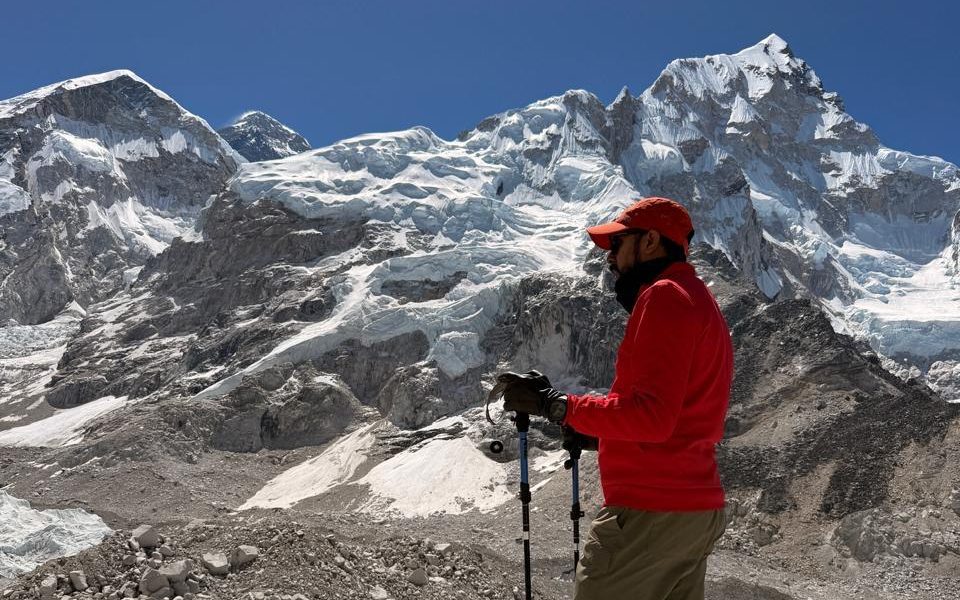
Clear mornings can provide spectacular views of mountains including Everest, Lhotse, Nuptse, Ama Dablam and Thamserku.
The drier conditions also make walking more comfortable because muddy and slippery sections left by the monsoon generally become less of a concern.
Of course, mountain weather remains unpredictable. A good trekking plan should always allow for changes in conditions.
October Temperature
October temperatures are generally comfortable for walking during sunny daytime hours in the lower and middle sections of the trek.
As you gain altitude, the temperature drops significantly.
At higher elevations, mornings and evenings can be very cold, and temperatures around Everest Base Camp can fall below freezing.
Warm layers, gloves, a good sleeping bag and appropriate trekking equipment are therefore essential.
October — Temperature
- Lukla: around 8–18°C during the day
- Namche Bazaar: around 3–14°C during the day
- Dingboche: around -2 to 8°C during the day
- Everest Base Camp: around -8 to 3°C during the day
- Higher-elevation nights: commonly below freezing
October generally provides comfortable walking temperatures during sunny daytime hours, but mornings and nights at higher elevations are cold.
October Crowds
The biggest disadvantage of October is its popularity.
Many trekkers visit Nepal during the autumn season, and the Everest Base Camp route can become particularly busy.
Namche Bazaar, Tengboche, Dingboche and Gorak Shep can have a lively atmosphere, while popular teahouses may fill quickly.
For trekkers who enjoy meeting people from different countries and sharing the trail with other adventurers, this can actually be part of the experience.
October is best for trekkers who prioritize stable conditions, excellent mountain views and the classic busy-season Everest experience.
Everest Base Camp Trek in November
November is the final month of the main autumn trekking period and can be an excellent time to visit Everest Base Camp.
The first part of November can still offer superb trekking conditions, with clear skies and excellent Himalayan visibility. As the month progresses, temperatures gradually fall and winter becomes more noticeable at higher elevations.
November Weather
One of November’s biggest attractions is the possibility of exceptionally clear mountain views.
The atmosphere is generally dry, and the mountains can appear especially sharp and impressive against a deep blue sky.
However, trekkers should be prepared for colder conditions than in October.
Toward the end of November, snowfall and winter-like conditions become increasingly possible at higher elevations.
November Temperature
November is noticeably colder, particularly during the mornings and evenings.
Daytime trekking can still be enjoyable when the sun is out, but temperatures can drop rapidly once the sun disappears.
At higher elevations, freezing temperatures are normal.
A properly insulated sleeping bag, warm jacket, thermal layers, gloves and good-quality trekking equipment become increasingly important.
November — Temperature
- Lukla: around 5–15°C during the day
- Namche Bazaar: around 0–10°C during the day
- Dingboche: around -5 to 5°C during the day
- Everest Base Camp: around -10 to 0°C during the day
- Higher-elevation nights: can fall well below -10°C
November is noticeably colder, particularly after sunset and at elevations above Dingboche. Trekkers should be properly equipped for winter-like conditions.
November Crowds
November remains popular, but the trail generally becomes quieter as the month progresses.
This makes November attractive to people who want excellent visibility associated with autumn but would prefer a somewhat calmer atmosphere than the October peak.
November is a great choice for trekkers who enjoy clear mountain scenery and do not mind colder temperatures.
You can also read our detailed Everest Base Camp Trek in Autumn Season guide for more information about trekking conditions during September, October and November.
Which Month Should You Choose, September, October or November for Everest Base Camp Trek?
There is no single answer because every trekker has different priorities.
Choose September if you prefer the beginning of the autumn season and would like to avoid the biggest October crowds. Late September is generally more attractive than the very beginning of the month if your priority is clearer weather.
Choose October if you want the classic Everest Base Camp experience. This is usually the strongest choice for a combination of good weather, dry trails and excellent mountain visibility, although it is also the busiest.
Choose November if you prefer crisp mountain scenery and do not mind colder conditions. The first half of November can be particularly attractive.
For most first-time Everest Base Camp trekkers, October would be our overall recommendation, while late September and early November can be excellent alternatives.
What Should You Expect During an Autumn EBC Trek?
Even in the best season, Everest Base Camp is a high-altitude adventure.
You will experience significant changes in temperature and landscape as you travel from Lukla toward the high Himalayas. Proper acclimatization, appropriate clothing, hydration and a sensible trekking pace are important.
A good itinerary should include adequate time for your body to adjust to increasing altitude. Rest and acclimatization days are an important part of a safe and enjoyable Himalayan journey.
Weather should also be considered when planning flights to and from the Everest region. Mountain conditions can change quickly, so some flexibility in your travel schedule is always useful.
If you are concerned about travelling in Nepal before your trek, our guide [Is Nepal Safe for Travellers?] can provide useful information about travel conditions, safety and preparation in Nepal.
Everest Base Camp Trek Booking for the Autumn Season
Autumn is one of the busiest trekking periods in the Everest region. October in particular can bring high demand for flights, guides, porters and teahouse accommodation.
If you are planning your trek for September, October or November, booking in advance can make your trip easier to organize.
At Himalaya View Treks, we can arrange a private Everest Base Camp Trek according to your preferred travel dates, itinerary and group size. Our local trekking team can help with permits, accommodation, guides, porters, transportation and other necessary arrangements.
For trekkers planning ahead, our Everest Base Camp Trek Booking for Autumn Season guide can also help you understand the booking process and prepare for the busy autumn period.
Related high Treks / Further Exploration
Looking to explore other iconic mountain ranges in Nepal beyond Everest? Consider the challenging Manaslu and Annapurna Combined Trek for your next Adventure.
Get Ready for the Autumn Everest Season
At Himalaya View Treks, we organize Everest Base Camp treks throughout the main trekking seasons and prepare our local team for the busy autumn period.
September, October and November bring a completely different atmosphere to the Everest trail compared with the monsoon months. The mountains become clearer, more trekkers arrive in the Khumbu, and the region comes alive with the excitement of the main trekking season.
Whether you choose September, October or November, the Everest Base Camp journey is about more than reaching a destination. It is the experience of walking through Sherpa villages, crossing suspension bridges, exploring the Khumbu Valley, meeting local people and gradually approaching the world’s highest mountain.
If Everest Base Camp has been on your bucket list, autumn is an excellent time to make the journey.
Plan your private Everest Base Camp Trek with Himalaya View Treks and experience the Everest region with a local trekking team.