Trip overview
Island Peak Climbing from Chhukung – 2 Days
Island Peak (Imja Tse) stands at 6,189 meters (20,305 feet) and remains one of Nepal’s most popular trekking peaks in the Everest region. The peak offers an exciting combination of high-altitude trekking, glacier walking, and Himalayan mountaineering. For trekkers who have already acclimatized in the Everest region, the Island Peak Climbing from Chhukung – 2 Days program provides an excellent opportunity to reach a Himalayan summit within a short timeframe.
Himalaya View Treks organizes a professionally guided Island Peak Climb from Chhukung for adventurers who are already on the way to Everest Base Camp, the Three Passes Trek, or other Everest region journeys. Our experienced climbing guides arrange the necessary climbing support, provide safety guidance, and help you complete the summit successfully.
Located in the beautiful Imja Valley, Island Peak sits between the impressive mountains of Ama Dablam and Lhotse. The climb rewards you with breathtaking views of Everest, Lhotse, Nuptse, Makalu, Baruntse, and other Himalayan peaks. The route includes glacier crossings, snow slopes, and a fixed rope section near the summit ridge, making it a perfect introduction to Himalayan peak climbing.
Many trekkers combine this adventure with the Everest Base Camp Trek 12 Days or choose the Everest Base Camp with Island Peak package for a complete Everest experience. If you are searching for another challenging summit after Everest Base Camp, you can also explore Lobuche Peak Climbing from Lobuche. For climbers who prefer a higher trekking peak with less technical difficulty, Mera Peak Climbing from Khare is another excellent option.
Why Choose Island Peak Climbing from Chhukung?
Starting the Island Peak climb from Chhukung is an ideal option for trekkers who have already explored the Everest region. Chhukung sits at an altitude of 4,730 meters and provides excellent acclimatization before attempting the summit. This makes the climb more comfortable and increases your chance of a successful ascent.
The 2-day itinerary from Chhukung saves valuable time compared to longer Island Peak expeditions while still providing a complete climbing experience. You do not need to repeat the lower Everest trekking route because you can join the climb directly from Chhukung after completing routes such as Everest Base Camp, Everest Three Passes Trek, or the Everest Base Camp with Island Peak itinerary.
The climb begins with a gradual trek toward Island Peak Base Camp through the stunning Imja Valley. The surrounding landscapes feature glaciers, rocky trails, and some of the most beautiful Himalayan scenery in Nepal. Before the summit attempt, our climbing guide provides important instructions about climbing techniques, safety procedures, and equipment use.
Although Island Peak requires physical effort and determination, proper acclimatization, preparation, and professional guidance make it achievable for fit trekkers. The final climb includes glacier travel and a steep snow section near the summit, where climbers use ropes and mountaineering equipment.
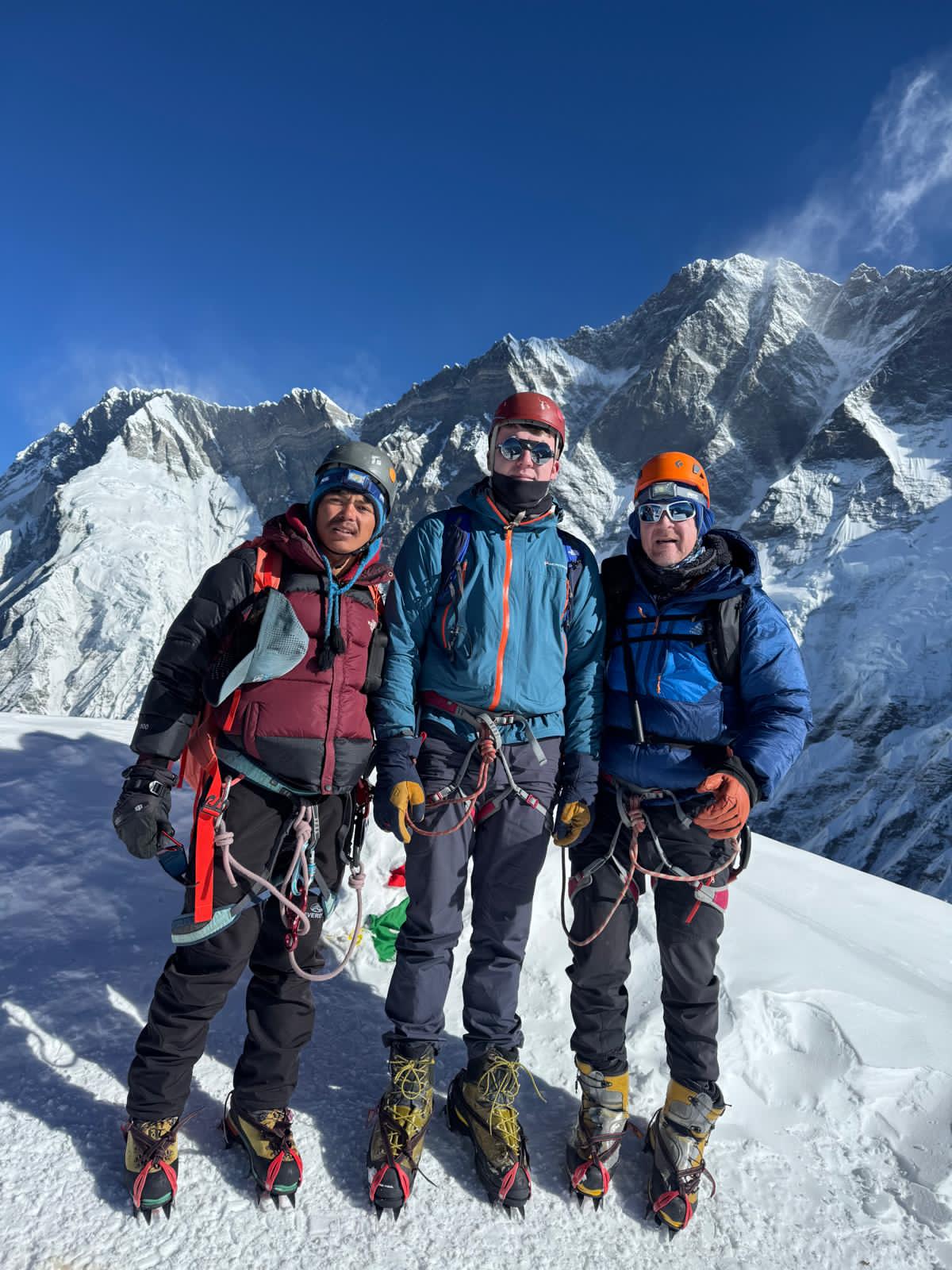
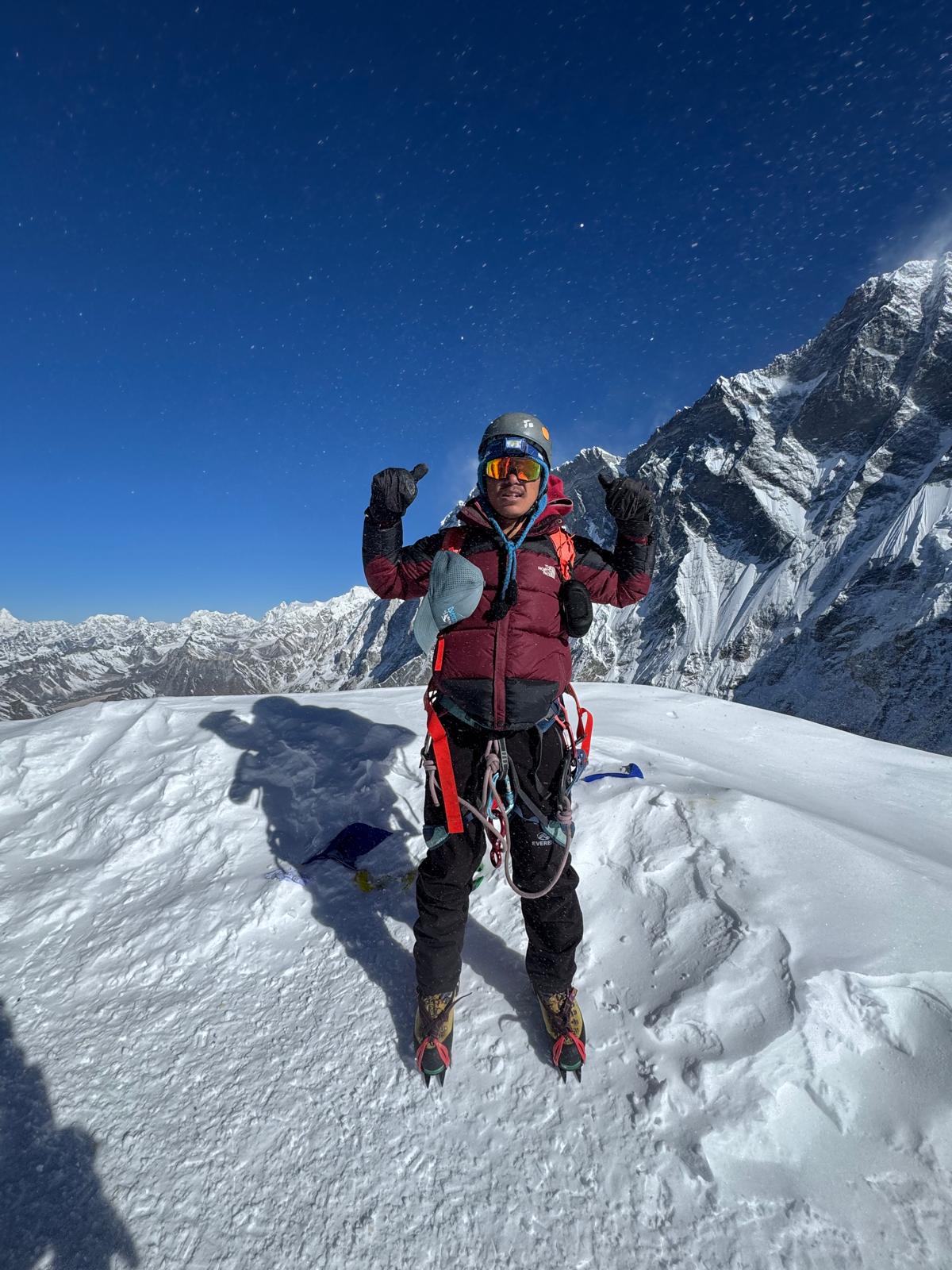
The highlight of the adventure comes when you stand on the Island Peak summit and witness a spectacular Himalayan panorama. The views of Everest, Lhotse, Ama Dablam, and surrounding peaks create an unforgettable memory of your Nepal climbing experience.
2-Day Island Peak Climbing Itinerary from Chhukung
Day 1: Chhukung to Island Peak Base Camp
Your Island Peak adventure begins from Chhukung, a beautiful Sherpa village located in the Imja Valley. After breakfast, you meet your climbing guide and begin trekking toward Island Peak Base Camp.
The trail gradually climbs through the valley, crossing rocky landscapes and alpine terrain. Along the way, you enjoy incredible views of Ama Dablam, Lhotse, Nuptse, and the surrounding Himalayan peaks. The walk takes several hours and allows your body to adjust further to the high altitude.
After reaching Island Peak Base Camp, your guide checks your climbing equipment and provides a final briefing before the summit attempt. You prepare your gear, rest, and enjoy the peaceful mountain environment before starting the early morning climb.
Day 2: Island Peak Summit and Return to Chhukung
You start the summit climb early in the morning when weather conditions usually remain stable. The route takes you across glaciers and snow-covered terrain toward the higher sections of Island Peak.
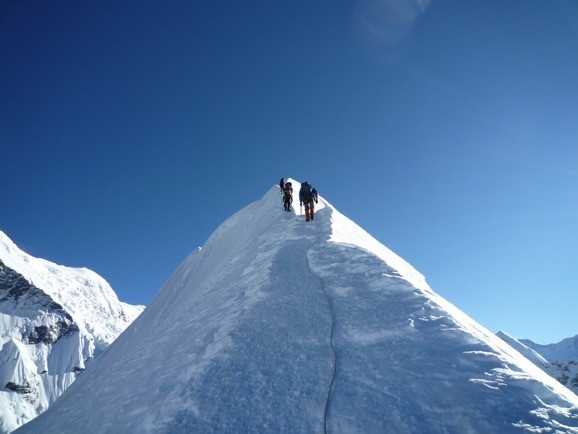
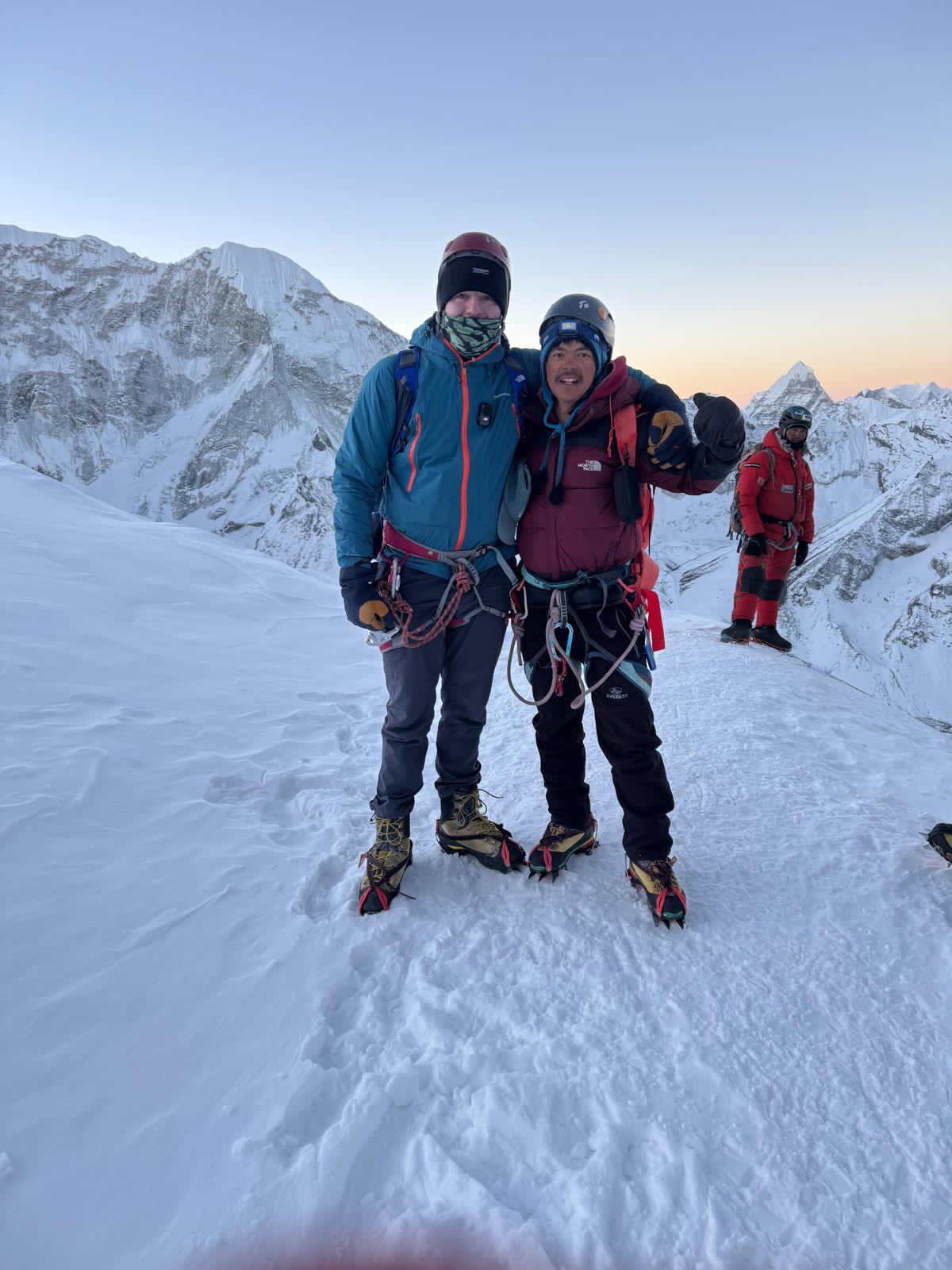
Your climbing guide assists you throughout the ascent and helps you use technical equipment safely. The final section includes a steep snow slope and fixed rope climbing before reaching the narrow summit ridge.
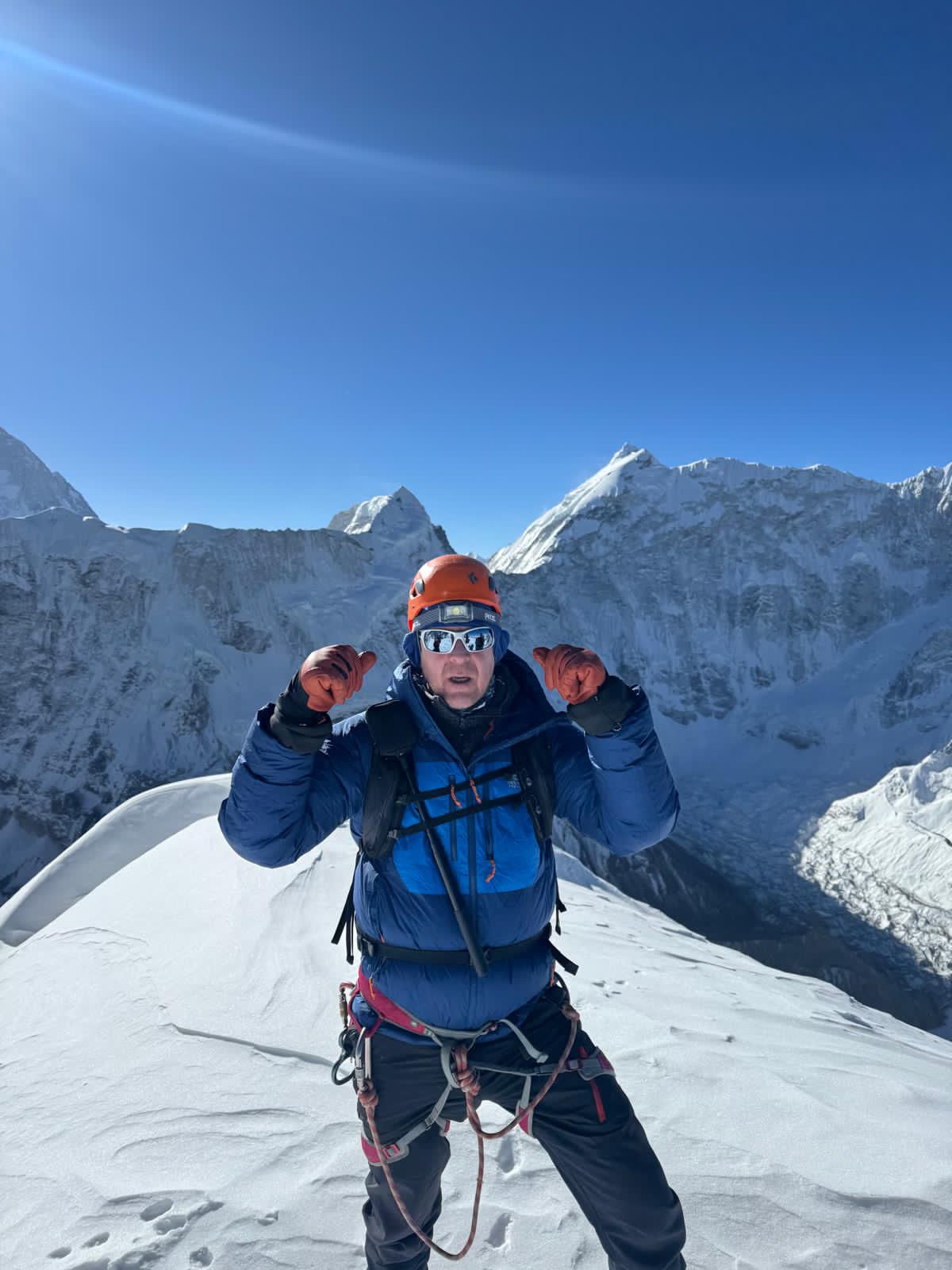
Standing on the top of Island Peak offers a once-in-a-lifetime experience. You enjoy incredible views of Mount Everest, Lhotse, Makalu, Cho Oyu, Ama Dablam, and other Himalayan giants.
After celebrating the summit achievement, you descend carefully back to Base Camp and continue toward Chhukung. The successful completion of Island Peak Climbing from Chhukung becomes one of the most memorable highlights of your Everest region adventure.
Island Peak Climbing Difficulty
Island Peak Climbing from Chhukung is a challenging but achievable adventure for trekkers with good fitness, strong determination, and proper acclimatization. The climb does not require advanced mountaineering experience, but it involves glacier walking, steep snow slopes, and basic technical climbing sections.
The altitude creates the biggest challenge because the summit reaches 6,189 meters above sea level. Climbers need to walk slowly, maintain a steady pace, and follow proper acclimatization practices. Since most climbers join this trip after spending several days in the Everest region, their bodies already adjust to the high altitude.
The final summit section requires the use of climbing equipment, including crampons, an ice axe, climbing harness, helmet, and fixed ropes. Our experienced climbing guides provide training and instructions before the climb, ensuring you understand how to use the equipment safely.
With proper preparation, physical fitness, and support from Himalaya View Treks, many adventure seekers successfully complete the Island Peak summit. The climb provides an excellent introduction to Himalayan mountaineering and builds confidence for future adventures such as Lobuche Peak Climbing from Lobuche or other Nepal trekking peaks.
Island Peak Summit Experience
Reaching the summit of Island Peak creates an unforgettable Himalayan memory. After completing the challenging glacier section and steep climb, you arrive at the summit ridge where breathtaking mountain views surround you in every direction.
From the top of Island Peak, you can admire some of the world’s highest mountains, including Mount Everest, Lhotse, Nuptse, Makalu, Cho Oyu, and Kanchenjunga on a clear day. The views of Ama Dablam and the beautiful Imja Valley below make the summit moment even more special.
The sunrise from Island Peak creates a magical atmosphere as golden light spreads across the Himalayan range. Standing above the clouds and surrounded by giant peaks gives climbers a true sense of achievement.
After enjoying the summit views, you carefully descend with your climbing guide and return to Chhukung. The combination of adventure, natural beauty, and personal achievement makes Island Peak one of Nepal’s most rewarding trekking peak experiences.
Best Time for Island Peak Climbing from Chhukung
The best seasons for Island Peak Climbing from Chhukung are spring and autumn. These periods offer stable weather, clear mountain views, and safer climbing conditions.
Spring season (March to May) provides excellent visibility and comfortable temperatures. The trails become colorful with blooming rhododendron flowers, and climbers enjoy clear views of the Himalayan peaks.
Autumn season (September to November) is the most popular period for Island Peak climbing. After the monsoon, the skies become clear, the mountain views become spectacular, and the climbing conditions remain favorable.
Winter climbing is possible for experienced mountaineers, but colder temperatures, heavy snowfall, and stronger winds make the climb more demanding. The monsoon season brings cloudy weather and slippery trails, making it less suitable for Island Peak climbing.
Combine Island Peak with Everest Base Camp Trek
Many trekkers choose to combine Island Peak with Everest Base Camp because it offers the perfect combination of trekking and mountaineering. The Everest Base Camp route allows you to explore famous Sherpa villages, ancient monasteries, and iconic locations such as Namche Bazaar, Tengboche, and Kala Patthar before attempting the Island Peak summit.
The Everest Base Camp Trek 12 Days itinerary provides an excellent introduction to the Khumbu region, while adding Island Peak creates a complete Himalayan adventure. The trek naturally prepares your body for the higher altitude and improves your confidence before the climbing section.
Himalaya View Treks can customize your itinerary according to your schedule and experience level. Whether you prefer a classic Everest Base Camp journey followed by Island Peak or a dedicated climbing program from Chhukung, we arrange a safe and memorable experience.
For climbers who want additional challenges after Everest Base Camp, we also organize Lobuche Peak Climbing from Lobuche. Those searching for Nepal’s highest trekking peak can explore Mera Peak Climbing from Khare, which offers incredible views of five of the world’s highest mountains.
Why Choose Himalaya View Treks for Island Peak Climbing?
Himalaya View Treks specializes in Everest region trekking and peak climbing adventures throughout Nepal. Our team understands the challenges of high-altitude climbing and focuses on safety, quality service, and memorable experiences.
We provide experienced and professional climbing guides who understand the Island Peak route from Chhukung. Our guides assist you with climbing techniques, equipment preparation, altitude management, and safety throughout the journey.
When you choose Himalaya View Treks, you receive:
- Experienced government-licensed trekking and climbing guides
- Carefully planned itineraries with proper acclimatization
- Assistance with climbing permits and logistics
- Quality accommodation and meals during the trek
- Support with climbing equipment arrangements
- Flexible programs based on your travel plans
- Local expertise and 24/7 assistance in Nepal
Whether you join Island Peak after the Everest Base Camp Trek or choose a standalone 2-day summit program from Chhukung, our team ensures a safe and enjoyable Himalayan climbing experience.
Frequently Asked Questions (FAQs)
Can I climb Island Peak after the Everest Base Camp Trek?
Yes. Many trekkers climb Island Peak after completing the Everest Base Camp Trek because they already have proper acclimatization. The climb from Chhukung becomes a natural extension of the Everest Base Camp adventure.
How long does Island Peak Climbing from Chhukung take?
The direct climb from Chhukung takes 2 days. However, many trekkers combine it with longer programs such as Everest Base Camp with Island Peak or Island Peak with Everest Base Camp.
Do I need previous climbing experience for Island Peak?
Previous climbing experience helps, but it is not mandatory. Fit trekkers with good preparation can complete the climb with guidance from experienced climbing professionals.
Is Island Peak harder than Mera Peak?
Island Peak involves more technical climbing sections, including a steeper summit approach and fixed rope sections. Mera Peak Climbing from Khare reaches a higher altitude but usually involves less technical climbing.
Can I combine Lobuche Peak and Island Peak?
Yes. Many experienced trekkers combine multiple trekking peaks in Nepal. Lobuche Peak Climbing from Lobuche offers another exciting Everest region climbing experience with more technical challenges.
What equipment do I need for Island Peak Climbing?
You need mountaineering equipment such as crampons, an ice axe, climbing harness, helmet, warm clothing, and proper trekking boots. Himalaya View Treks can help arrange necessary climbing gear.
Why choose Chhukung as the starting point?
Chhukung provides excellent acclimatization and easy access to Island Peak Base Camp. Starting from Chhukung allows trekkers to save time while enjoying a complete summit experience.
Book Your Island Peak Climbing from Chhukung Today
Island Peak Climbing from Chhukung offers an incredible opportunity to experience Himalayan mountaineering in the Everest region. With stunning mountain views, professional guidance, and a well-planned itinerary, this adventure creates memories that last a lifetime.
Contact Himalaya View Treks to plan your 2-day Island Peak Climb from Chhukung and experience the thrill of standing on a Himalayan summit.
Short Itinerary
Island Peak Climbing Itinerary - 2 Days From Chhukung
Day 01: Meet our Climbing Sherpa in Chhukung and then Trek to Island Peak Base Camp (5,087m) Trek duration: 3-4 hours, the trail follows the Imja Valley, offering stunning views of Lhotse, Ama Dablam, and Makalu. The base camp is set near Imja Glacier, where climbers acclimatize and receive pre-climb training.
Day 02: Island Peak base camp to Island Peak summit ( 6189 m ) and then Back to Chhukung
- Summit push starts at midnight (12-2 AM) for optimal conditions.
- Climbing duration: 10-12 hours round trip
- The climb includes:
- Steep rock sections (scrambling)
- Glacier crossing with crevasses (roped up)
- A steep headwall (45-50° ice slope) leading to the summit ridge
- Summit views: Everest, Lhotse, Makalu, Baruntse, and Ama Dablam
- After summiting, descend to Base Camp and then trek back to Chhukung.
Included
- Climbing Sherpa Guide and Porter From Chhukung
- Climbing permit.
- Climbing and Camping gears.
- All meals (Breakfast, lunch, and dinner) with Tea / Coffee
- Guide's: Meals, lodge, insurance, equipment, salary etc.
- Certificate
Not Included
- personal Climbing Equipment's, you can rent in Chhukung
- Rescue operation charges encase.
- Tips for Sherpa and porter
Useful Info
Island Peak Climbing from Chhukung
Island Peak is the most popular trekking peak. It takes lots of days to even reach the base camp. However, you can adopt the Everest Base Camp Itinerary as well. Moreover, the summit push starts from High Camp. There are many crevasses, few technical sections, and steep inclined snowy sections too. You will have to use basic climbing equipment and gear to reach the summit. It is arduous as it is a snow-capped mountain in Nepal.
The ridge line walking makes it harder to climb.
Trail Length
The distance between the base camp and Lukla is around 33.6 kilometers. It is the highest distance that you cover during the trek. However, it increases if you add Everest Base Camp to your trekking itinerary. There are many downhill, uphill, rugged trails and glacier walking. For any normal person, trekking that distance is not an easy activity. Long-distance trekking can become tiring but end result is rewarding.
Altitude Sickness
Altitude sickness is the biggest factor on this trip. The maximum height on this trip is 6189 m from sea level. Therefore, AMS can happen. The trip starts from Kathmandu which is at 1300 m. The change in altitude is the major cause of altitude sickness. Proper acclimatization is needed. Therefore, our itinerary focuses more on the client’s safety.
Weather & Climatic Conditions
Nepal’s mountain region has unpredictable weather and climatic conditions. Day temperature is normal but night hours are pretty freezing. Weather can change drastically in just an hour. Expect unexpected changes in climate and weather. However, the team will analyze the situation and only decide whether to push or not.
Climbing Preparation
The best way to prepare for climbing is by doing cardiovascular workouts. These kinds of cardio exercises help to increase lung capacity. In order to climb the mountain, you need strong and healthy lungs.
Do some strength-building training like planks, push-ups, and squats. Cycling is also the best option to prepare your body for climbing. Always start these activities 4-5 months before traveling to Nepal for climbing.
Gain some basic mountaineering knowledge. Our team will help you get familiarized with the climbing gears and climbing ideas. Also, follow healthy dietary habits.
Difficulty & Technical Aspects
- Moderate technical difficulty (requires basic mountaineering skills).
- Use of crampons, fixed ropes, ascenders (Jumar), and ice axe.
- Good physical fitness and altitude acclimatization are necessary.
Best Time to Climb
- Spring (March-May) & Autumn (September-November)
- Avoid monsoon (June-August) and winter (December-February) due to extreme weather.
Permits Required
- Island Peak Climbing Permit from Nepal Mountaineering Association (NMA)
- Sagarmatha National Park Entry Permit
- Khumbu Pasang Lhamu Rural Municipality Permit
FAQs
-
Can I add Everest Base Camp Trek with Island Peak Climbing?
Yes, you can add Everest Base Camp Trek in any trekking trips of the Everest region. EBC trek route is the focal point of Khumbu region.
-
What sort of accommodation is available during the expedition?
Accommodation during the trekking is in teahouses/lodges. However, in high camp during the summit push, you will have to use the tented accommodation.
-
What sort of food is available on Island Peak Climbing?
You can get the food from the menu. The menu items range from Nepali to western styles.
-
Do I need prior climbing experience for Island Peak?
You don’t need prior climbing experience to climb the Island Peak. However, it is wise to know the basics and theoretical part of mountaineering as well as knowledge of gears.
-
Is it compulsory to have a climbing guide on Island Peak Climbing?
Yes, it is mandatory to have a climbing guide on island Peak. In fact, every peaks of Nepal require you to hire a climbing guide otherwise you will not get the climbing permit.
-
Do I need travel insurance for Island Peak?
Travel insurance is mandatory. You must get the insurance which covers emergency helicopter rescue, accidents and medical aid.
-
Can I Join Island Peak Climbing from Chhukung not from Kathmandu
Yes, you can join Island Peak Climbing from Chhukung too. All you have to do is trek to Chhukung and meet our Climbing team members.
-
What is the cost of Island Peak Climbing from Chhukung?
The cost of Island Peak Climbing from Chhukung is 900 $ per person. The package lasts for 2 days. It includes climbing guide, permit and 1 Nights tent accommodation with meals & drinks
Latest Traveller's Reviews
Travel experiences of our clients who recently returned from their trips.