
Gorakshep – The Last Stop of the Everest Base Camp Trek
The Gorakshep is the Last stop of the Everest base camp trek. located at an altitude of 5,164 meters (16,942 feet), is the last teahouse settlement on the Everest Base Camp trek. This tiny yet remarkable village sits in the heart of the Khumbu region, surrounded by icy glaciers and towering Himalayan peaks. Trekkers spend their final night here before visiting Everest Base Camp (5,364m) and climbing Kala Patthar (5,545m) for the best sunrise view of Mount Everest.
The name Gorakshep translates to “dead ravens,” derived from the barren landscape and thin air that make life extremely difficult for wildlife and vegetation. Despite the harsh conditions, a few brave Sherpa families run simple tea houses, offering trekkers food, lodging, and warm hospitality at the highest elevation on the route.
Gateway to Everest Base Camp and Kala Patthar
From Gorakshep, trekkers continue their journey to the iconic Everest Base Camp, which takes about two to three hours on a rugged glacial trail. This is where climbers begin their expedition to the summit of Everest, while trekkers enjoy standing at the base of the world’s highest mountain. After exploring the base camp and taking memorable photos, most trekkers return to Gorakshep for the night.
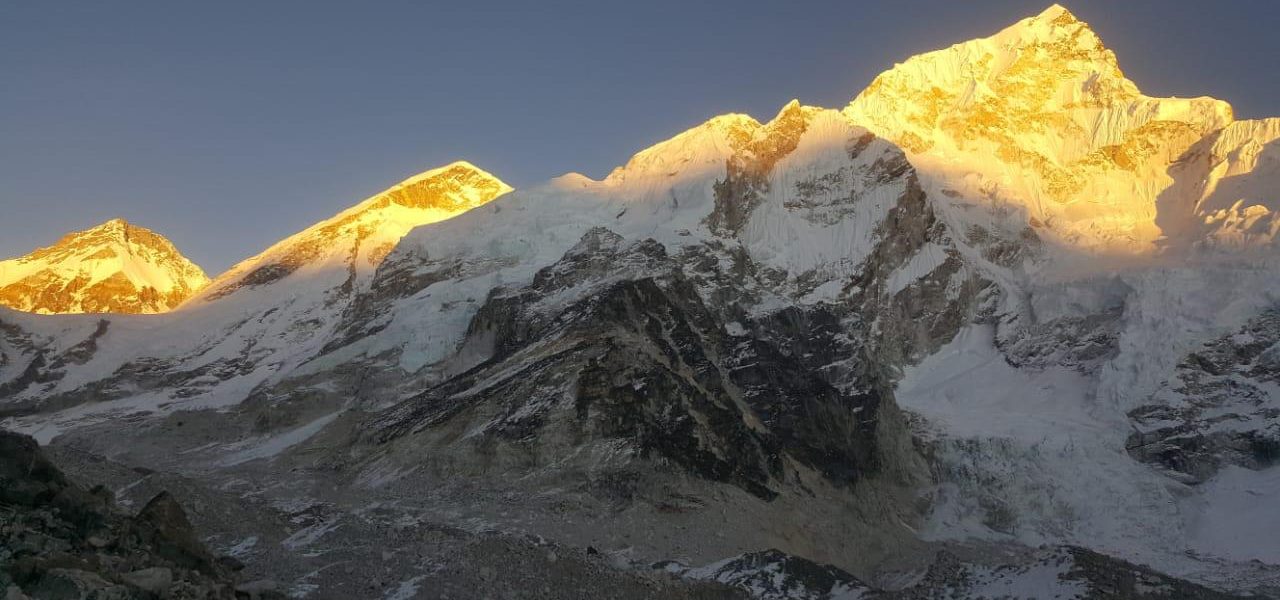
The next morning, an early hike to Kala Patthar rewards adventurers with one of the most spectacular panoramas in the world. From the summit, you can see Mount Everest, Nuptse, Lhotse, Pumori, and the Khumbu Glacier in golden morning light—a breathtaking finale to your Himalayan journey.
Teahouse Experience at the Edge of the World
Accommodation in Gorakshep is basic but cozy. Teahouses here offer shared rooms with thick blankets, simple meals, and hot drinks. Electricity and Wi-Fi are available but limited and often powered by solar panels. Because of the high altitude, nights can be extremely cold, and oxygen levels drop significantly, so it’s important to stay hydrated and ascend gradually to avoid altitude sickness.
Despite its remoteness, Gorakshep’s rustic charm and dramatic surroundings make it an unforgettable stop on the Everest Base Camp trek. Sitting by the window of a teahouse, sipping warm tea, and watching the glowing peaks of Pumori and Everest is a truly magical experience.
Returning from the Top of the World
After visiting Everest Base Camp and Kala Patthar, trekkers begin their descent from Gorakshep to Pheriche or Pangboche, continuing downhill to Namche Bazaar and finally to Lukla, where the trek concludes with a scenic flight back to Kathmandu.
Gorakshep marks the turning point of the Everest Base Camp adventure — the place where dreams come true and memories of the mighty Himalayas last forever.
Surroundings of Gorakshep – The Heart of the High Himalayas
Gorakshep, perched at 5,164 meters (16,942 ft) in Nepal’s Khumbu region, is not only the last teahouse settlement on the Everest Base Camp trek, but also one of the most awe-inspiring places on Earth. Its surroundings are dominated by icy glaciers, snow-capped peaks, and rugged landscapes that seem to touch the sky. The area around Gorakshep offers some of the most dramatic and unforgettable scenery in the entire Himalayas.
The Himalayan Giants Around Gorakshep
The surroundings of Gorakshep are embraced by several towering mountains. To the north rises Mount Pumori (7,161m), an elegant pyramid-shaped peak often called the “Daughter of Everest.” Beyond it lies Lingtren (6,749m) and Khumbutse (6,665m), standing like guardians at the gateway to the Khumbu Glacier. The massive Mount Everest (8,848.86m) itself towers in the background, though it’s often partially hidden behind Nuptse from Gorakshep’s viewpoint.
To the east, trekkers can see Nuptse (7,861m) and Lhotse (8,516m) forming a grand ridge that connects with Everest. These peaks gleam with snow and ice, reflecting the sunlight in spectacular colors during sunrise and sunset. Every direction you look from Gorakshep reveals a new masterpiece of Himalayan grandeur.
The Khumbu Glacier and Icefall
Just beyond Gorakshep stretches the Khumbu Glacier, a vast river of ice that flows from the Western Cwm beneath Everest. The Khumbu Icefall, one of the most dangerous sections for Everest climbers, is also part of this glacial system. Trekkers walking from Gorakshep to Everest Base Camp follow a trail along the lateral moraine of this glacier, passing over rocky, uneven terrain with constant views of icy blue crevasses and towering seracs. The sound of cracking ice and the whistling mountain winds make this journey both thrilling and humbling.
A Harsh but Beautiful Environment
The surroundings of Gorakshep are harsh and barren, with very little vegetation due to the extreme altitude. The landscape is mostly made up of loose rocks, glacial debris, and dry sand. Yet, this desolation adds to the raw beauty of the place. The thin air, freezing temperatures, and powerful silence create an otherworldly atmosphere that defines the spirit of the Everest region.